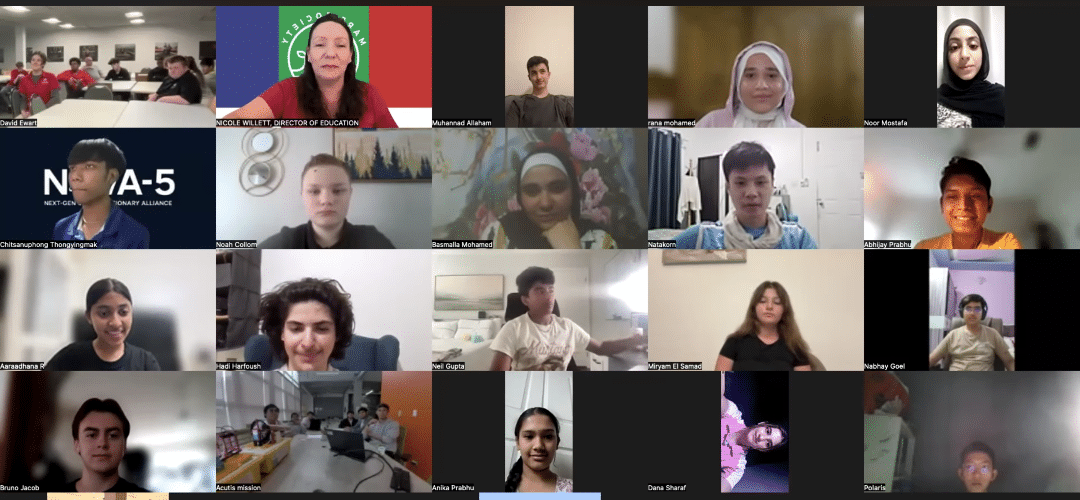
More than 100 students representing 20 countries came together this summer to participate in the 5th Annual International Mission to Mars Engineering Design Competition, an intensive five-week virtual program supervised by Nicole Willett, M.S., Director of Education for The Mars Society. The program challenged aspiring scientists and engineers to tackle one of humanity’s greatest technological challenges: designing a realistic human mission to Mars.
This year’s competition showcased some of the strongest projects in the program’s five-year history, demonstrating not only remarkable technical skill but also the creativity, collaboration, and problem-solving abilities of the next generation of space explorers.
2026 Overall Winners
🥇 1st Place Overall: Team DexLab 1 (Egypt & Syria) Hadi Harfoush, Fatma Elsady, Homama Mariam.Tala Alobaisy
🥈 2nd Place Overall: Team Sojourner (United States) Abhijay Prabhu, Anika Prabhu
🥉 3rd Place Overall: Mission Acutis (Costa Rica) Saul Alfaro Lizano, Jemsen Alvarez Mena, Karina de Fatima Escorcia Sánchez, Santiago Fallas Altamirano, Gabriela Fallas Murillo, Yohann Mora Aragón
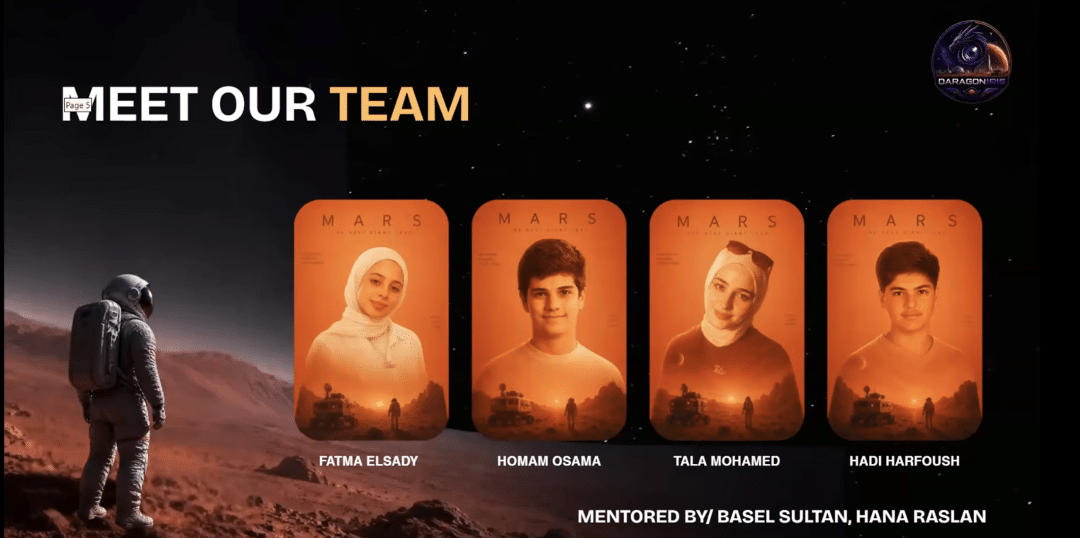
The winning teams distinguished themselves through innovative engineering solutions, thoughtful scientific planning, and comprehensive mission designs that balanced technical feasibility with the realities of long-duration human exploration.
A University-Level Engineering Experience
Modeled after engineering design courses offered at leading universities around the world, the competition ran from June 8 through July 10, 2026, with students participating in intensive morning and afternoon sessions Monday through Friday.
Throughout the five-week program, participants attended lectures presented by leading scientists and engineers from NASA, the aerospace industry, and academia. These experts shared insights into current Mars exploration, spacecraft design, planetary science, life support systems, and the many challenges associated with sending humans to the Red Planet.
The educational experience extends well beyond traditional classroom learning by immersing students in authentic engineering design practices while encouraging collaboration across international teams.
Designing Humanity’s Future on Mars
Each student team was tasked with developing a complete Mars surface mission lasting up to 18 months. Their proposals required careful planning across every aspect of a human expedition, including:
- Habitat design and life support systems
- Surface vehicles and mobility
- Scientific instruments and research objectives
- Power generation and sustainability
- Crew size and composition
- Landing site selection
- Food and resource planning
- Mission duration and operational timelines
- Surface exploration strategies
To mirror the collaborative nature of real aerospace organizations, teams organized themselves into three specialized departments:
- Science
- Engineering
- Human Operations
Every mission proposal was evaluated based on four critical considerations: Science, Engineering, and Human Operational Challenges. Students quickly discovered that successful mission design requires balancing ambitious scientific goals with engineering constraints, astronaut safety, and budget limitations.
Inspiring the Next Generation of Space Leaders
Building on the success of previous competitions, which have collectively engaged hundreds of students from around the globe, the International Mission to Mars Engineering Design Competition continues to foster international collaboration while inspiring young people to pursue careers in science, technology, engineering, and mathematics (STEM).
“This year’s reports were among the most impressive we’ve seen in the five-year history of the competition,” said Nicole Willett. “The level of innovation, professionalism, and technical understanding demonstrated by these students gives us tremendous optimism for the future of space exploration. Watching students from different cultures and backgrounds collaborate toward a common goal reminds us that humanity’s journey to Mars will truly be an international endeavor.”
As interest in human exploration of Mars continues to grow, programs like the International Mission to Mars Engineering Design Competition provide students with invaluable experience solving real-world engineering challenges while building the teamwork and leadership skills essential for future careers in aerospace and beyond.
The Mars Society congratulates all participating students, mentors, and volunteers whose dedication made this year’s competition an outstanding success and looks forward to welcoming the next generation of Mars mission designers in 2027.
To learn more about the Mars Society and its education program, please visit our website (marssociety.org).