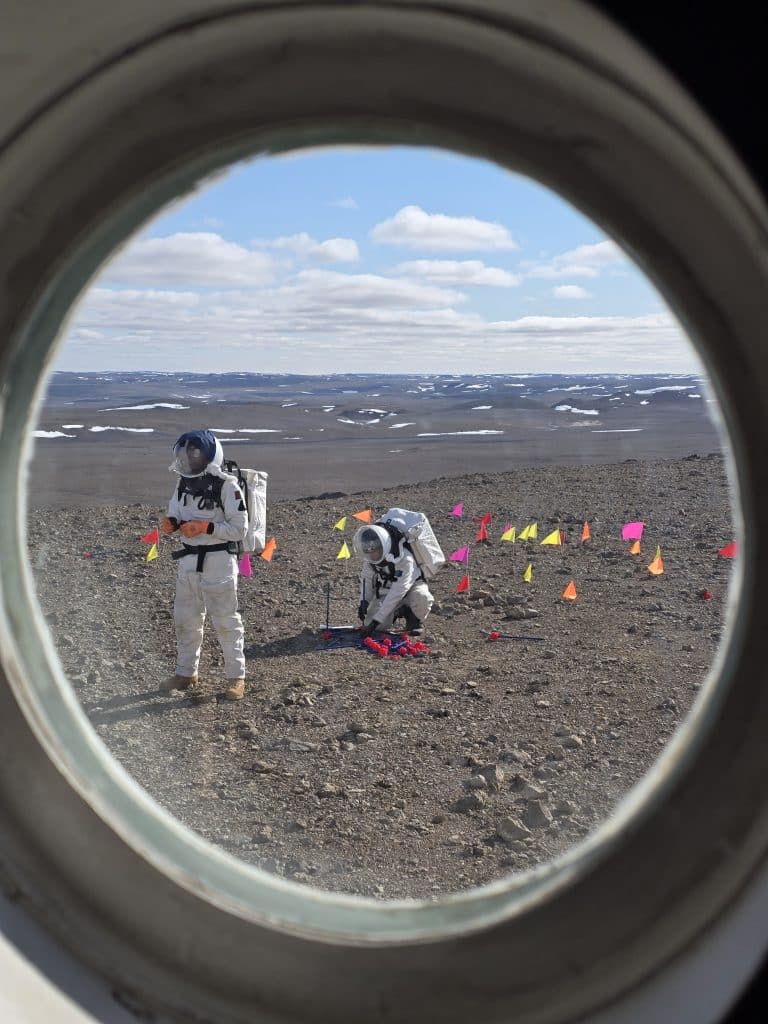
Flashline Mars Arctic Research Station Crew 19 has officially begun its Mars analog mission on Devon Island, entering full simulation after completing critical maintenance activities left by the Advance Team. The five-member international crew—bringing expertise in engineering, psychology, behavioral science, geology, and the humanities—immediately put their diverse skills to work.
Their first EVAs included retrieving fuel and water supplies, conducting field observations, and becoming familiar with one of Earth’s closest analogs to the Martian surface. On their second day, the crew participated in simulated spacewalks supporting a University of Colorado Boulder psychological study, testing spatial reasoning and tactile skills while wearing full spacesuits.
They also demonstrated the practical realities of long-duration exploration by creatively solving an unexpected habitat waste management issue, underscoring that successful missions depend as much on operational problem-solving as they do on scientific discovery.
The mission’s third and fourth days focused heavily on field science. Crew members explored ancient geological formations surrounding Haughton Crater, collecting mineral samples from impact-created fracture lines while studying distinctive shatter cones—rare geological features formed by the enormous forces of the crater’s creation.
They also visited Trinity Lake and Trinity Creek to collect algae and water samples, measure permafrost depth, and revisit research sites first documented during a previous Flashline mission. Although navigation challenges turned one planned short EVA into a much longer trek, every scientific objective was successfully completed. Along the way, the crew encountered unusual ring-shaped permafrost formations—humorously nicknamed “Trinity crop circles”—that sparked lively scientific discussion and served as a reminder that even Earth’s most studied Mars analogs continue to hold fascinating mysteries.
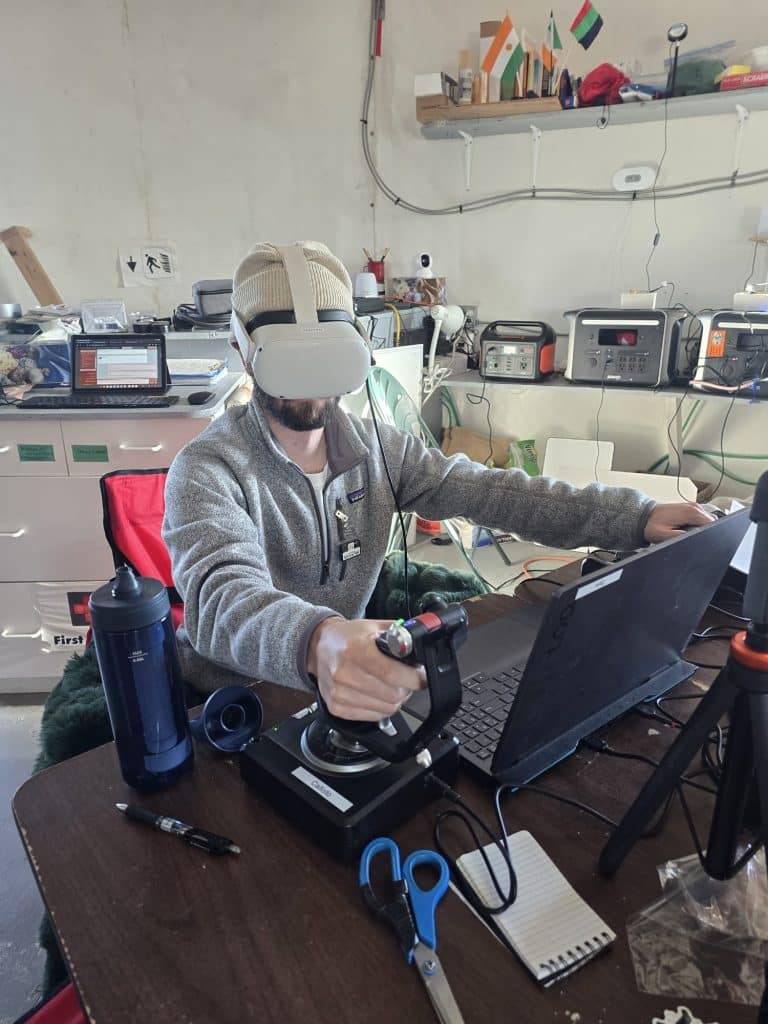
Beyond its scientific accomplishments, Crew 19’s first four days have highlighted the teamwork, adaptability, and environmental stewardship that are essential for future human exploration of Mars. Commander Trevor Jahn continued evaluating a virtual reality rover experiment designed by researchers at the University of Colorado Boulder, while XO Laura Thomas expanded her ongoing research into crew dynamics and individual performance under mission conditions.
Throughout every EVA, the crew emphasized minimizing their environmental footprint on Devon Island, recognizing that the lessons learned in respecting this unique Arctic landscape will help shape how future explorers approach Mars. With a successful start to the mission, Flashline Station Crew 19 is laying the groundwork for research that will help prepare humanity for the challenges of long-term exploration and eventual settlement of the Red Planet.
To learn more about our Flashline analog mission and the Mars Society, visit: marssociety.org.