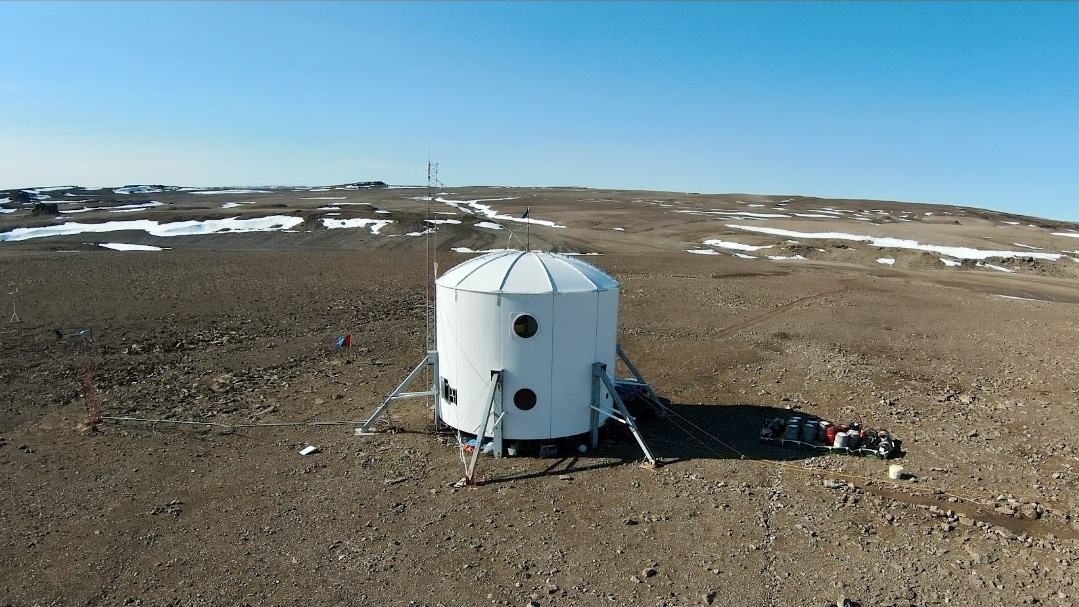
The Mars Society is pleased to announce the deployment of Crew 19 to the Flashline Mars Arctic Research Station on Devon Island in Nunavut Territory in Canada for a multi-week mission beginning in early July during the 2026 Arctic field season.
Located approximately 900 miles from the North Pole, Flashline is one of the world’s most important Mars analog research facilities, providing a unique environment for testing technologies, conducting scientific investigations, and studying human performance under conditions similar to those expected during future missions to the Red Planet.
During this summer’s expedition, Crew 19, commanded by Trevor Jahn of the Aerospace Corporation, will conduct a wide range of research and field studies focused on exploration science, operational readiness, environmental monitoring, technology demonstration, and analog astronaut activities. For the fourth year in a row, researchers at the Mars Society’s Flashline analog facility will investigate the challenges of living and working in extreme environments. Their mission advances knowledge that benefits both Earth and future human exploration of Mars.

The crew’s priorities will align closely with many of the objectives outlined in NASA’s DARES (Decadal Airborne Research and Exploration Strategy), including extreme environment operations, Earth system science, climate resilience, workforce development, analog astronaut research, environmental monitoring, and the testing of innovative technologies in remote field settings.
Crew members will operate under simulated exploration conditions while carrying out scientific investigations and field operations in one of the most isolated and Mars-like regions on Earth. Their work will contribute to the development of best practices, operational procedures, and scientific understanding applicable to future human exploration missions.
In the coming weeks, the Mars Society will announce the full Crew 19 roster and highlight the specific research projects, technology demonstrations, and field studies planned for this year’s expedition. These projects will showcase the diverse expertise of the crew and the growing role of analog research in preparing for humanity’s future on Mars.
An advance team, arriving ahead of the crew, will focus on installing upgrades to heating and electrical systems, improving ventilation, and building and deploying a sensor package to monitor potentially harmful gases, CO₂, and other compounds.
For more than two decades, Flashline has served as a pioneering platform for exploration research, bringing together scientists, engineers, students, and explorers from around the world. The Crew 19 mission continues this tradition, helping bridge the gap between Earth-based research and the realities of future planetary exploration.
Stay tuned for additional announcements, crew introductions, and mission updates as Crew 19 prepares to embark on its Arctic expedition to Devon Island. To learn more about our Flashline analog program, please visit: fmars.marssociety.org.