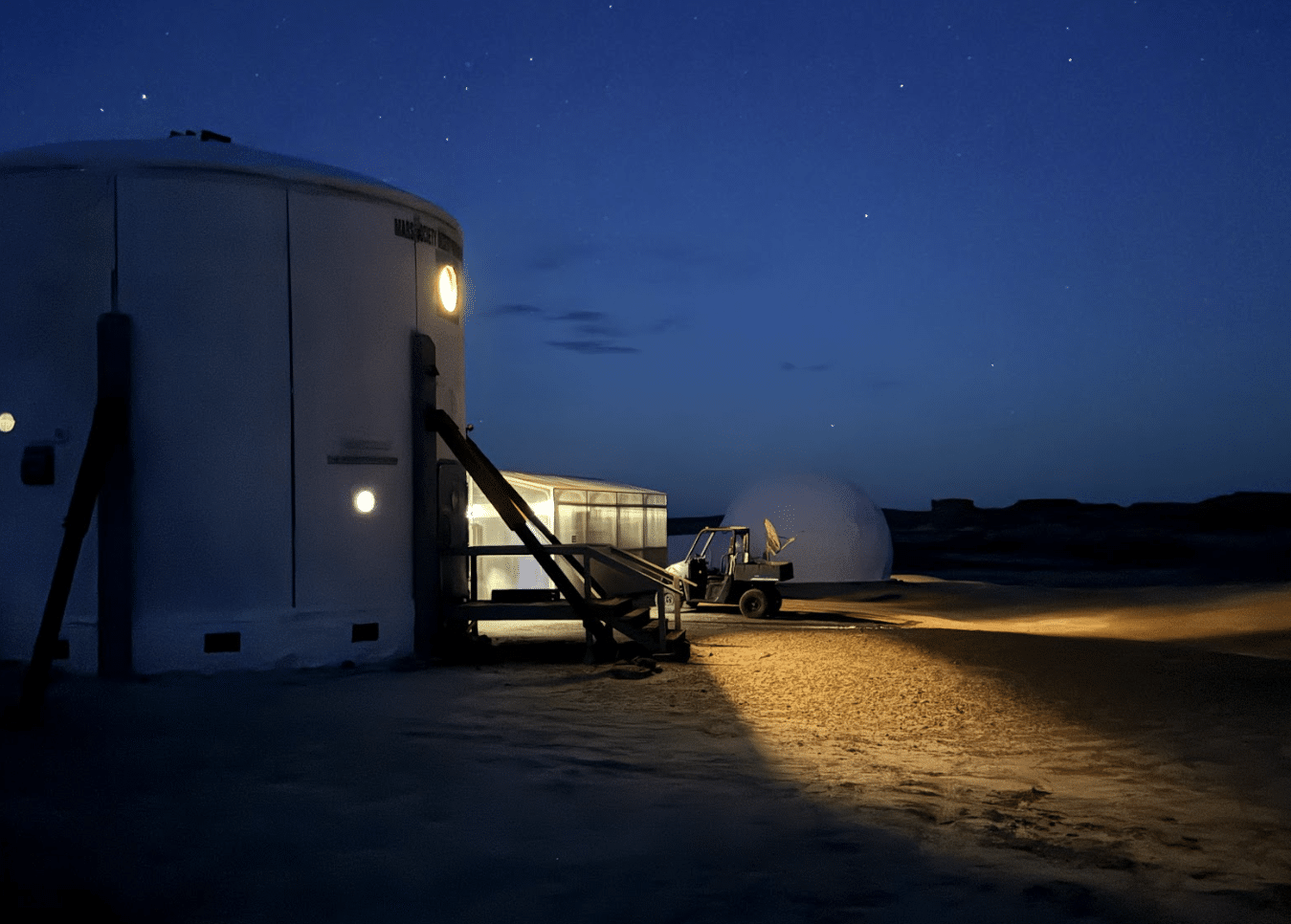
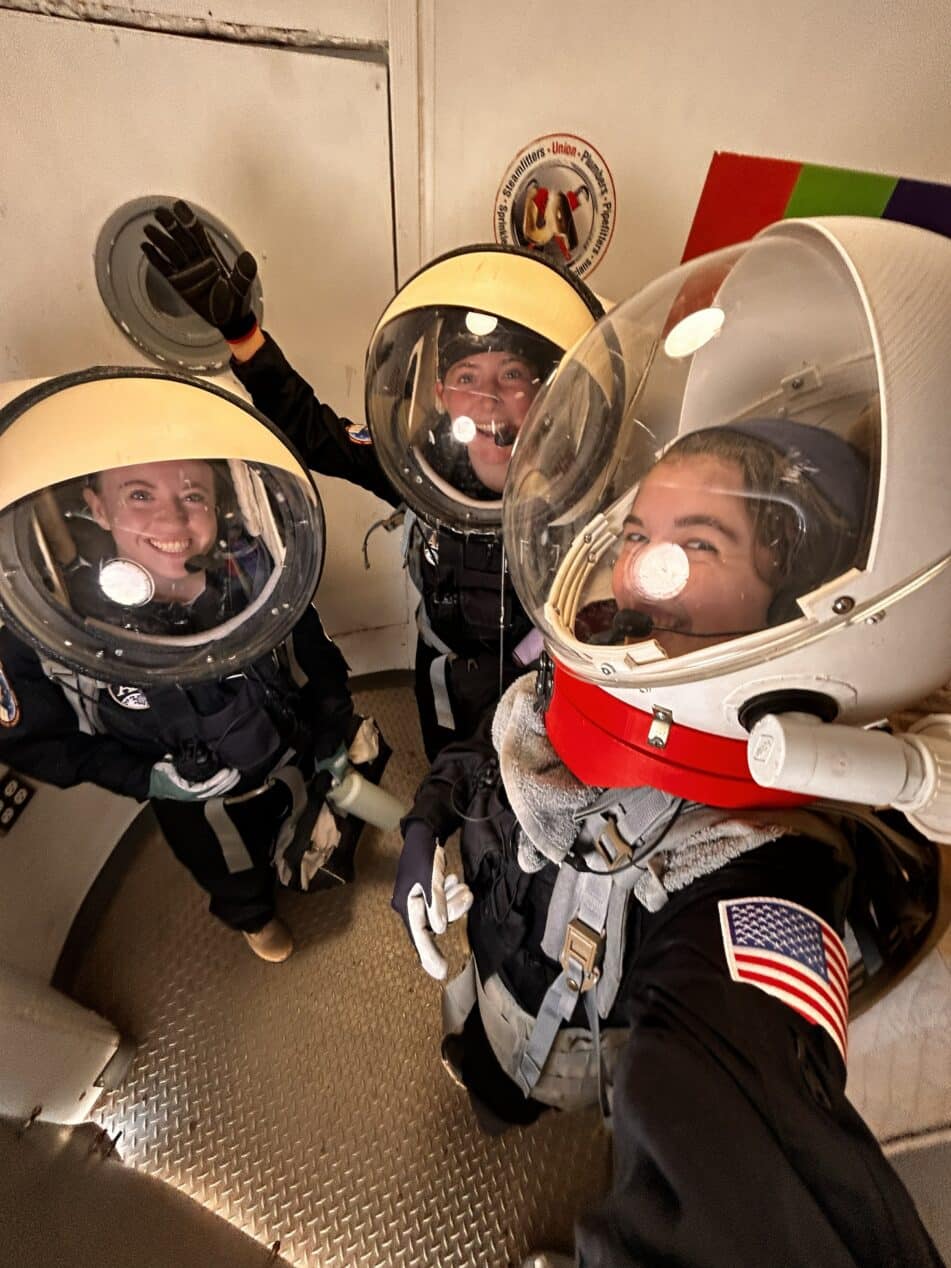
Crew 337 completed a successful five-sol simulation at the Mars Desert Research Station, operating under full Mars analog protocols. The crew of six scholars from the Florida Institute of Technology in Melbourne, Florida conducted the pilot mission for the university’s new Analog Research Program.
This mission consisted of four research projects focused on plant biology and satellite communication for future Mars missions. Eleven EVAs were conducted throughout the duration of the mission, and the crew operated under a communications time delay of 15 minutes. An alternate crew member served as Ground Control, assisting with external research and communications for the team. In addition to the four research projects conducted onsite, the team participated in two psychological studies aimed at testing the crew’s mental state and wellbeing throughout the five-sol mission via daily surveys.
The crew completed the mission effectively and efficiently, having laid a strong foundation for the future of the Florida Tech Analog Research Program.
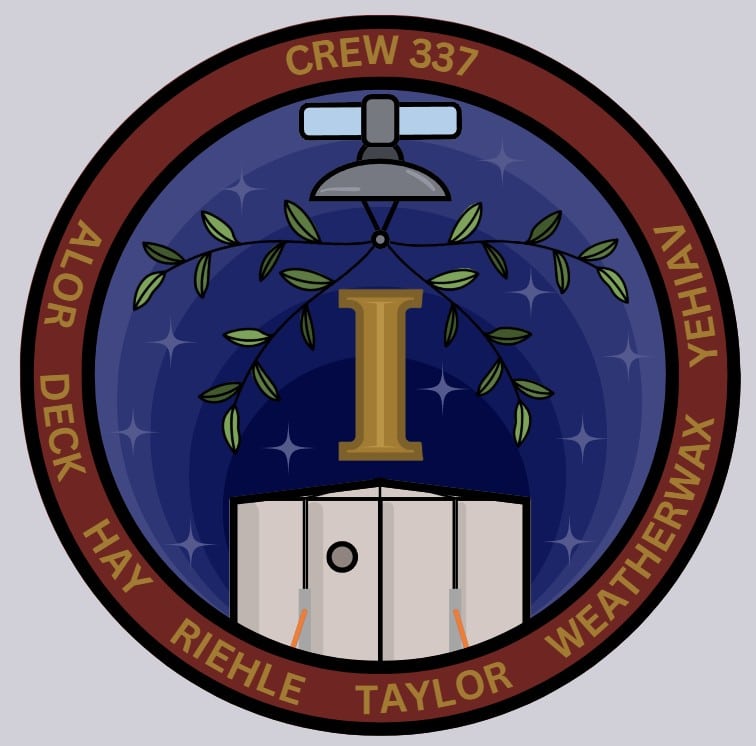
Crew:
Commander: Peyton Hay
GreenHab Officer: Anna Weatherwax
Crew Scientist: McKenna Taylor
Crew Scientist: Allona Yehiav
Crew Engineer: River Riehle
Health and Safety Officer: Ann Alor
Mission Objectives and Results:
Plant Growth and Microbial Experiments (led by McKenna Taylor, Anna Weatherwax, and Allona Yehiav)
Soil samples were collected from sites around the Mars Desert Research Station to be taken back to the Florida Institute of Technology.
These samples will be examined for the presence of plant growth-promoting bacteria (PGPB).
Collected PGPB will then be tested to determine the lower limits of pressure levels necessary for continued observation of metabolic activity.
These PGPB samples will then be used in experiments looking to breed microbes capable of surviving and thriving at lower pressures, similar to those experienced on Mars.
Soil samples were collected from the White Rock Canyon site for testing of growth of Brassica rapa seeds treated with plant growth-promoting bacteria.
Growth in soil samples collected onsite was compared to growth in potting soil and simulated Martian regolith.
Germination was observed and plants will be transported back to the Florida Institute of Technology for further growth observations, analysis, and imaging.
Prior to the mission, batches of sugar snap pea seeds were put under low pressure conditions and treated at 25, 50, and 75 torr.
Upon arrival, the seeds were planted and observed to watch for germination rates.
Pea seeds appeared to tolerate low pressures, but experienced reduced or slowed germination compared to non-treated seeds.
Weather Satellite Data Downlink (led by River Riehle)
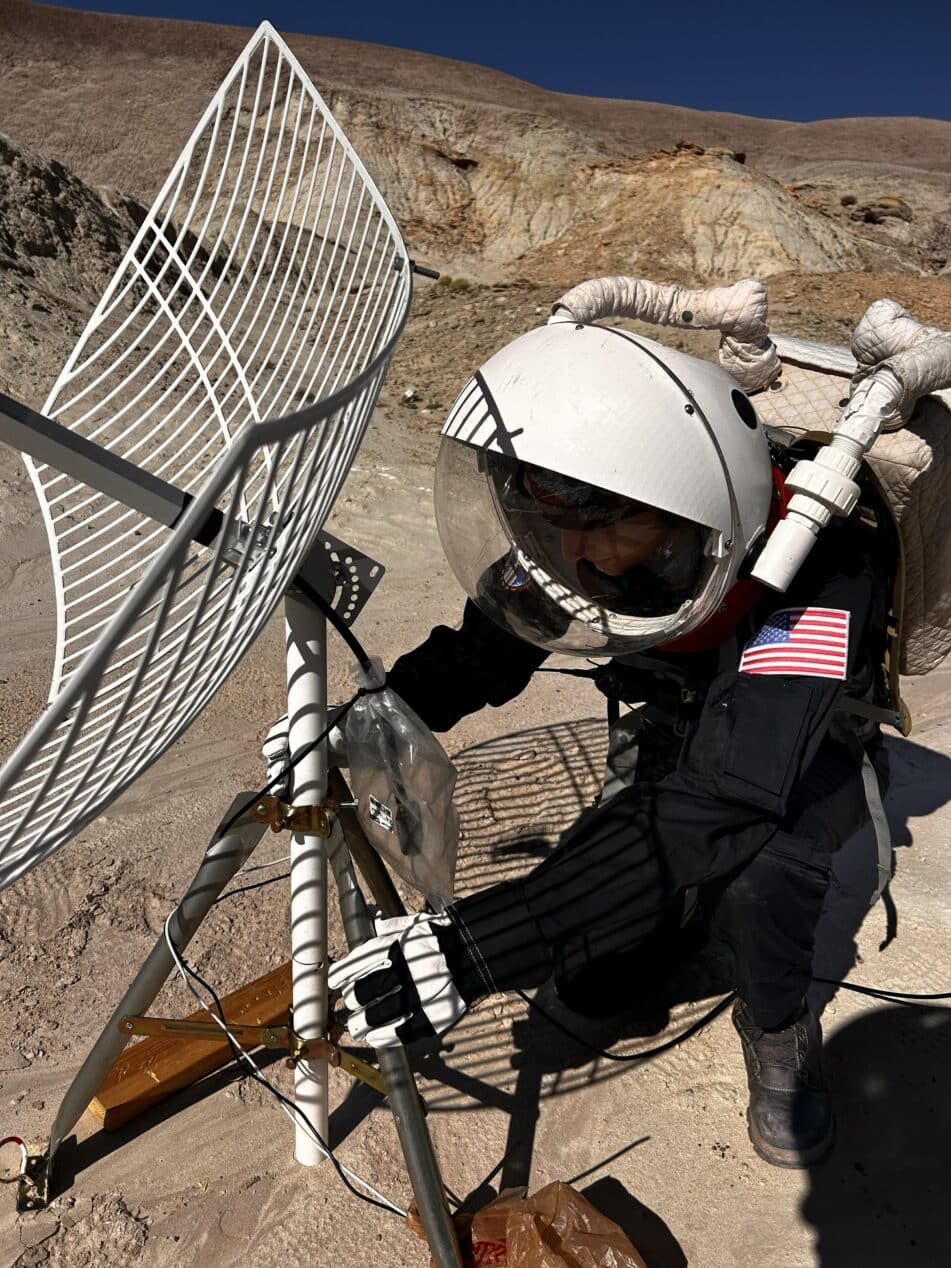
Utilized antenna system to downlink weather data from GOES-19 satellite.
Processed data onsite to produce interpretable graphics displaying multiple bands of sensor images.
Compiled processed images to discern patterns in the evolution of weather systems and predict daily weather conditions to a moderate degree.
Operations & EVA Summary
Completed 11 EVAs (training, satellite antenna employment, soil sampling, photography, and exploration).
Noted faulty/inoperable equipment (EVA-Link nodes, radio headsets, radios, etc.).
Demonstrated strong procedures, EVA-Link tracking, rover safety, and teamwork under realistic constraints.
Hab & Station Seasonal Closure
Cleaned and organized Hab, Science Dome, and RAM.
Performed minor repairs (small water leaks).
Left all systems (smart home dashboard, EVA-Link, iMac, radios) in default state.
Filed all required final reports.
Crew Reflections:
Crew 337 closed out the MDRS 2025-2026 season with a five-sol mission. During those five sols, the crew completed 11 total EVAs, conducted four different research projects, and successfully laid the foundation for the Florida Institute of Technology Analog Research Program as the first crew of the program.
The team arrived at the Mars Desert Research Station with little idea of what to expect, as no crew member had conducted a mission at the MDRS prior to Mission 337. Each crew member worked together to make the Mission 337 a success, stepping in to assist with research projects, Hab maintenance, and general crew wellbeing far beyond the handbook expectations for each crew role.
For the duration of the five-sol mission, the Mars Desert Research Station was home to uproarious laughter and conversations rooted in inspiration, with each crew member only growing more certain in their aspirations of becoming astronauts themselves. For Sol five, the crew hosted a visiting journalism crew and had the chance to truly reflect on the mission and each member’s personal meaning for the mission. Crew 337 is leaving the Mars Desert Research Station as better scientists and acquaintances-turned-family, and each crew member could not be more excited for the future of the Florida Tech Analog Research Program.
By Jacob Mikanowski, The Economist, October 9, 2026 The International Space Development Conference (ISDC) is an annual jamboree for interplanetary entrepreneurs. It draws space-industry professionals, NASA researchers, rocket-launch obsessives, young dreamers and anyone else hoping one day to live in—or at least profit from—settlements beyond Earth. Last year it took place in Orlando, Florida, in a convention centre sandwiched between Sea World and the Universal theme park. Crowds flocked around vendors peddling dehydrated “space salsa” and guided tours of Florida’s… READ MORE >
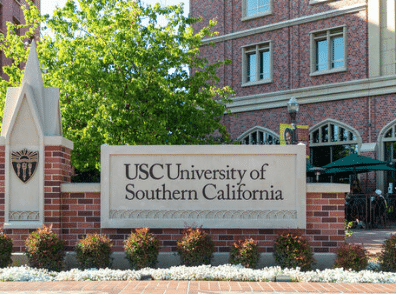
The Mars Society is pleased to announce that Dr. Vinton G. “Vint” Cerf, widely recognized as one of the founding fathers of the Internet, will deliver a plenary address at the 2026 International Mars Society Convention, taking place October 22–24 at the University of Southern California (USC) in Los Angeles. Cerf’s presentation will focus on an extraordinary technological challenge: developing an Internet that extends beyond Earth to Mars and eventually throughout the solar system. Best known for co-designing the TCP/IP… READ MORE >
The countdown is on! In just two weeks, the 2026 International Mars Society Convention will bring together some of the world’s leading voices in space exploration for three action-packed days at the University of Southern California (USC) in Los Angeles, October 22–24. This year’s convention features an outstanding lineup of scientists, astronauts, engineers, entrepreneurs, and space policy experts exploring the latest developments in Mars science, technology, exploration, and human settlement. Among the featured speakers are former NASA astronaut Dr. Garrett… READ MORE >