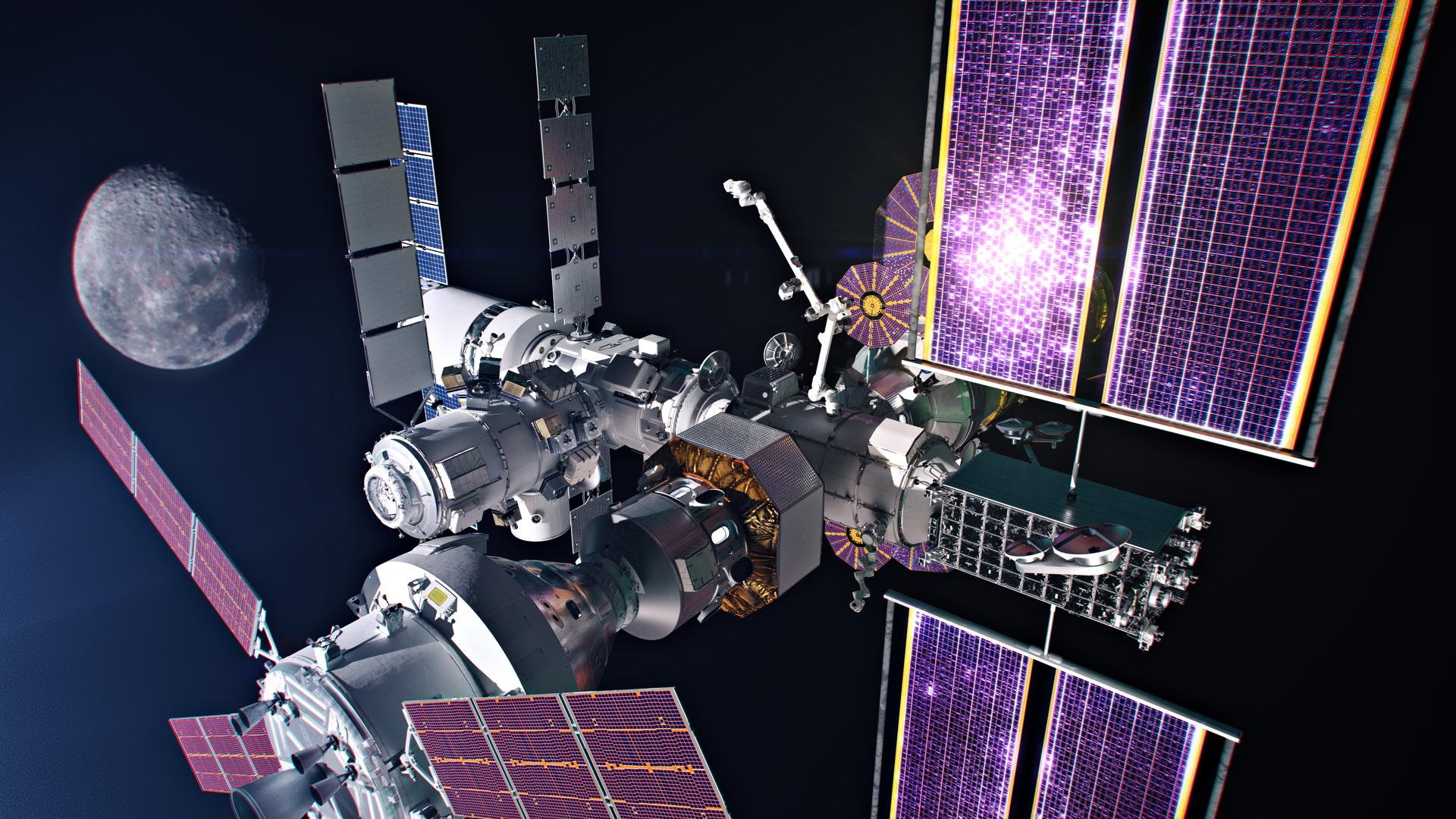
By Lou Farrell, Senior Writer, Red Planet Bound
Picture the moment a crew steps onto Martian soil for the first time. Mars exploration promises to become humanity’s next great leap, but reaching it will likely take more talent and resources than any single country can supply.
Global partnerships can narrow that gap by letting space agencies combine their expertise and hardware. Four real-world examples, from a Japanese lunar rover to a European one bound for Mars, show that cooperation is already moving explorers toward the red planet.
How Global Space Organizations Work Together
Much of that teamwork now runs through the National Aeronautics and Space Administration (NASA), the European Space Agency (ESA) and the Japan Aerospace Exploration Agency (JAXA). Collaboration among the three has become the standard model for ambitious space missions, especially those reaching toward Mars. JAXA has twice returned asteroid samples, ESA has built cargo ships and probes for decades, and NASA brings crewed experience dating back to Apollo.
Nations formalize these partnerships because deep-space exploration involves high costs, real risk and a common ambition they’d rather carry together. Participating countries work from the shared Artemis Accords framework established in 2020, which lays out principles for peaceful and cooperative space exploration.
Signatories agree to release scientific data publicly and to provide notice of where and how they plan to operate. If two landers ever target the same crater, that heads-up helps teams sort out the overlap ahead of time.
The Benefits of Pooling Global Knowledge and Resources
Aboard the International Space Station (ISS), where multinational crews have lived continuously since 2000, agreements on paper become daily practice. The outpost orbits Earth, yet the routines its partners built there, including control centers across several countries that work as one, could guide Mars exploration.
Who Operates the Space Station?
Crew rotations and cargo deliveries keep the station’s calendar full, and five space agencies share that load. Through them, 15 countries operate together as one team, since ESA alone represents 11 European nations:
- NASA, United States
- Roscosmos, Russia
- ESA, Europe
- JAXA, Japan
- Canadian Space Agency (CSA), Canada
Every agency contributes hardware or services, including the CSA’s Canadarm2, a robotic arm that moves entire modules and even carries spacewalking astronauts.
Who Benefits From the Research?
The outpost also serves as an open laboratory for scientists well beyond its five operating agencies. More than 108 countries have conducted research investigations aboard the ISS. Their work spans more than two decades of research across fields ranging from medicine to materials science.
Studies of astronaut bone loss and water recycling aboard the station now shape how planners prepare crews for months away from Earth.
Japan and NASA Team up for a Lunar Rover
Cooperation in practice begins on the moon, where NASA and JAXA plan to give astronauts a way to roam. Under their April 2024 agreement, Japan takes on the engineering and construction of a pressurized rover. Two astronauts can live aboard for up to 30 days at a time while exploring the region around the lunar South Pole.
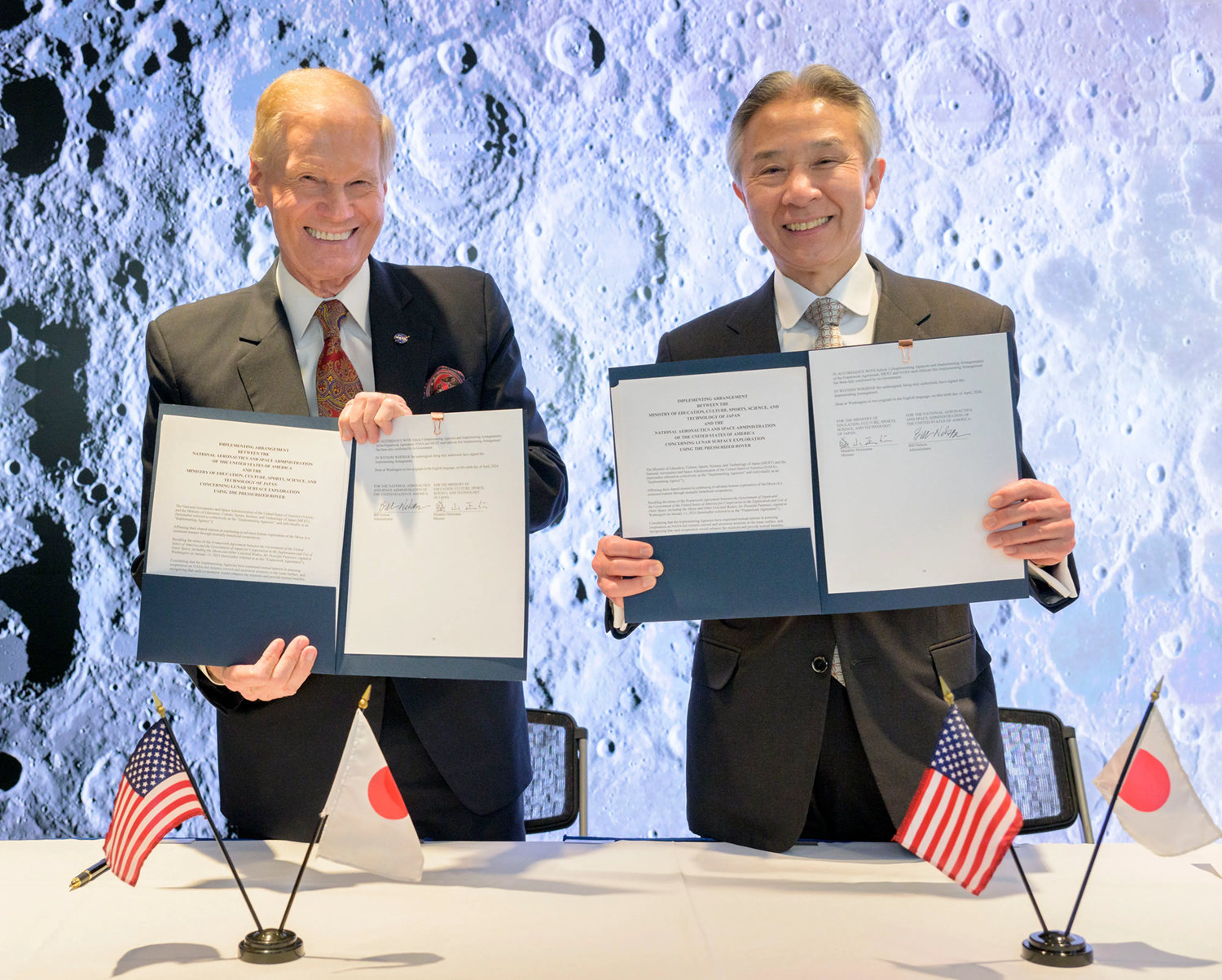
Inside its sealed cabin, crews can drive and live in everyday clothing, much like a motor home. Japan’s role extends past the build, since JAXA will also oversee the rover’s day-to-day operations throughout its time on the moon. In exchange, NASA will launch the rover, deliver it to the lunar surface and fly two Japanese astronauts there on future missions.
These crewed space missions could double as rehearsals for life on Mars. Each pair of astronauts would steer across crater rims under long polar shadows, then spend weeks sharing a single cabin. Future Mars crews will likely face much the same routine.
ESA and NASA Power Orion’s Journey Beyond the Moon
While Japan’s rover is still in development, Orion already pairs American and European engineering into a single deep-space vehicle. Before any crew could fly aboard Orion, NASA needed to prove the spacecraft could survive the trip, and Artemis I delivered.
That uncrewed test run carried the capsule on a critical deep-space journey beyond the moon in late 2022. The spacecraft looped 40,000 miles past the lunar far side and returned to Earth over 25.5 days. Mission teams then pored over how its heat shield held up during reentry, since Mars exploration will demand trips lasting many months.
ESA contributes Orion’s service module, which powers, propels and cools the vehicle from its spot directly beneath the capsule. Once Orion clears the atmosphere, the module’s solar arrays unfold to span 19 meters.
The unit’s design draws on Europe’s Automated Transfer Vehicle, a cargo craft that once resupplied the ISS. Even the crew’s oxygen and water ride in that European hardware.
From liftoff to the final hours before reentry, Artemis I relied on hardware built on two continents. Orion also plays a critical role in NASA’s Moon to Mars exploration approach, in which the agency pursues discoveries for the benefit of humanity.
Canada and NASA Reach Farther Than Ever on Artemis II
The follow-up mission put a crew of four aboard the same Orion design. NASA’s Reid Wiseman, Christina Koch and Victor Glover flew the mission with CSA astronaut Jeremy Hansen, and all four returned home in April 2026.
His position as mission specialist marked a shift from the JAXA rover and Orion projects, which combine hardware from different agencies. Artemis II placed an international astronaut aboard the spacecraft.
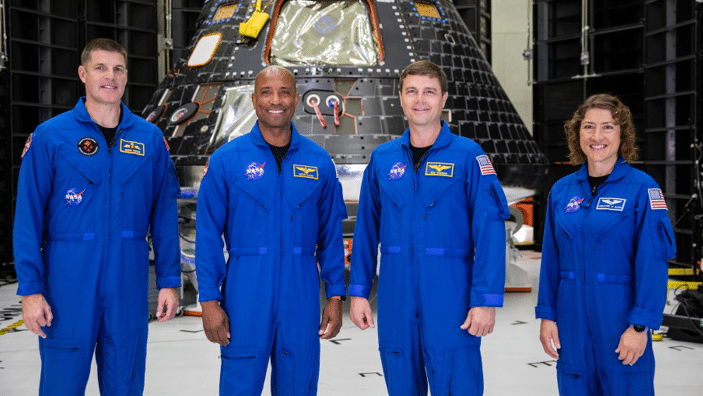
Multinational crews like this one can help reduce duplicated effort and spread the cost and risk of future Mars missions across more nations. Artemis II demonstrated that dynamic firsthand. During the flyby, the crew broke the distance record set by the Apollo 13 astronauts in 1970 and traveled farther from Earth than any humans before them.
Their flight also ended a gap of over half a century since humans last ventured into lunar space. Hansen became the first astronaut from outside the U.S. to fly around the moon, a preview of the international crews Mars exploration may need.
ESA and NASA Search for Signs of Life on Mars
Where NASA’s work with Japan and on Artemis centers on the moon, ESA’s Rosalind Franklin rover will head straight for the red planet. Part of the agency’s ExoMars program, it will carry an onboard laboratory to analyze its samples.
A May 2024 agreement commits NASA to providing launch services, heater units, and propulsion and landing elements for the rover. The heater units earn their keep after dark, when Martian temperatures can plunge below minus 100° Fahrenheit even near the equator. Powered by radioisotopes, they emit steady warmth from decaying radioactive material, allowing the robot’s hardware to keep working until sunrise.
Searching for signs of ancient life ranks among the biggest goals in Mars exploration. With ESA targeting a 2028 Mars launch, the rover aims to resume the hunt after landing in 2030. Its drill can reach up to 2 meters below the surface to sample layers where overlying soil may have shielded organic remnants from radiation.
Looking Ahead to a Global Future on Mars
Cooperation has already reached deep space. ESA’s service module powered Orion beyond the moon, and Artemis II later showed that a mixed crew could make that trip.
Still ahead, Japan’s pressurized rover aims to carry astronauts across the lunar South Pole. Rosalind Franklin, meanwhile, plans to drill into Martian ground in search of ancient life. Together, those four partnerships sketch out how a future Mars crew might travel, with hardware and astronauts drawn from many nations.
When people look up at Mars, they’re seeing the next destination for space missions humanity can fly together.
Author’s Personal Note: If you can think back to days in school, it’s likely that you detested group projects. In the world of science and innovation, however, there is hardly anything better. The achievements humanity has made thanks to the discoveries born from partnerships is impossible to ignore. And it’s quite exciting and uplifting to see what humanity can do when we work together, isn’t it?