By Jacob Mikanowski, The Economist, October 9, 2026
The International Space Development Conference (ISDC) is an annual jamboree for interplanetary entrepreneurs. It draws space-industry professionals, NASA researchers, rocket-launch obsessives, young dreamers and anyone else hoping one day to live in—or at least profit from—settlements beyond Earth.
Last year it took place in Orlando, Florida, in a convention centre sandwiched between Sea World and the Universal theme park. Crowds flocked around vendors peddling dehydrated “space salsa” and guided tours of Florida’s “Space Coast”, the stretch of shoreline that includes Cape Canaveral and the Kennedy Space Centre. An astronaut signed copies of his children’s book.

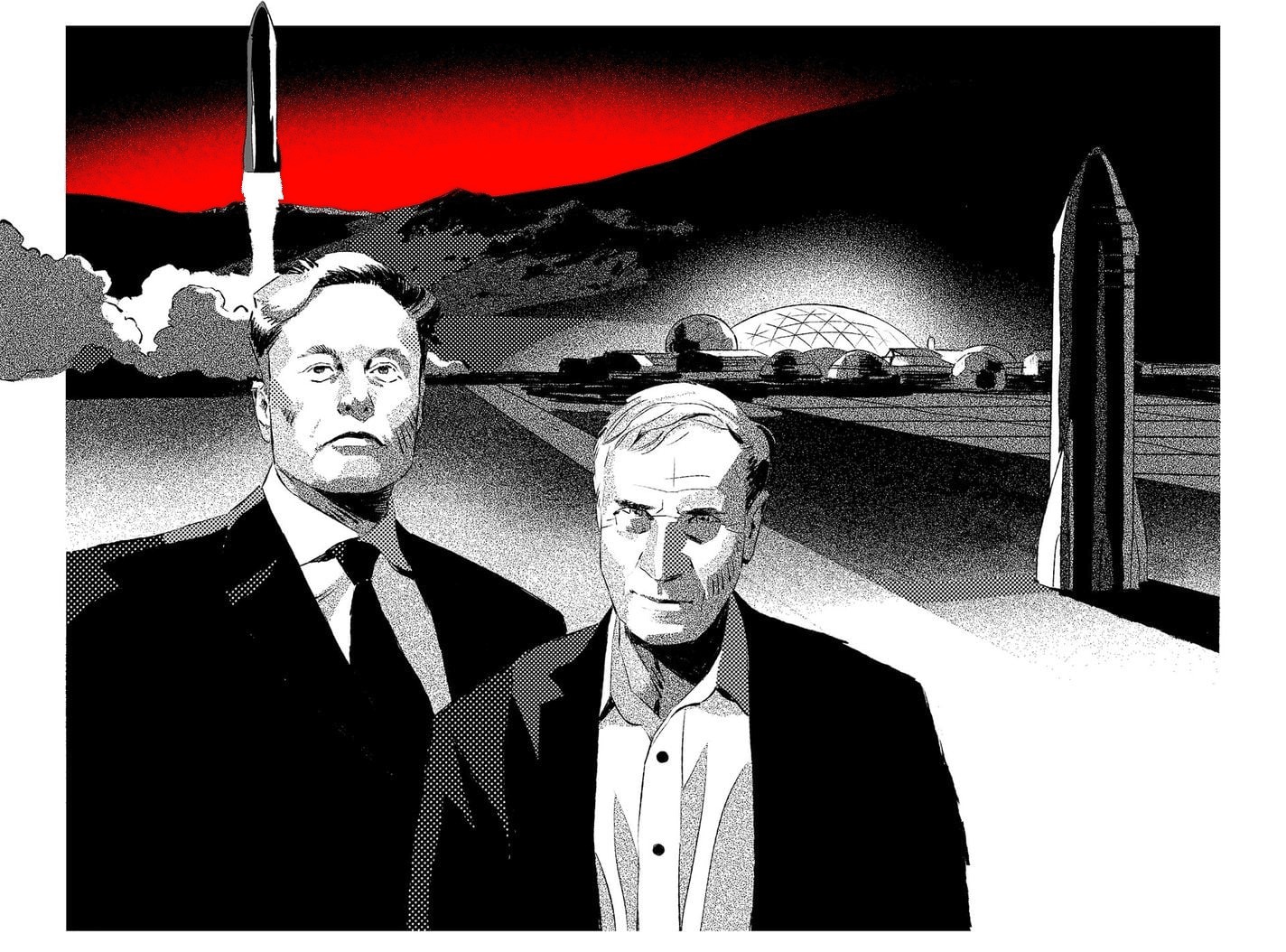
At one table sat Robert Zubrin, the man who has for more than three decades been one of the most forceful proponents for colonising Mars. Zubrin, then 73, in a rumpled jacket and his signature black cap, was there to sign copies of his latest book, “The New World on Mars”. But his stall wasn’t getting much footfall, save for a retired NASA engineer who wanted to shoot the breeze about Elon Musk’s and Jeff Bezos’s rival spacecraft and the “race with the Chinese to build a base on the Moon”.
Despite having no official position in the vast federal bureaucracy that oversees America’s space programme, and little of the public profile of the billionaires now driving the new space race, Zubrin could be considered the intellectual architect of the next great push into the solar system. In a series of books over the past three decades, he has laid out what many in the space industry regard as one of the most compelling visions for sending humans to the Red Planet.
Zubrin is an engineer by training and it shows: his prose is dense with technical minutiae, from the precise mass-to-thrust ratios of different rocket-fuel mixtures to the velocity changes required to escape the gravitational pull of asteroids and planets. But his books are also infused with a broader philosophy: that settling Mars is essential to human progress. Want to supercharge technological innovation? Save democracy? End war? Zubrin’s answer, in one form or another, is to go to Mars.
Want to supercharge technological innovation? Save democracy? End war? Zubrin’s answer, in one form or another, is to go to Mars
Although Zubrin and Musk want to get to the same destination, they disagree over who should be in the cockpit. Zubrin acknowledges that much of the recent progress in spaceflight has come from the private sector, but believes that a mission to Mars should be led by the government, with entrepreneurs like Musk competing to make it happen. Despite his ambivalence towards NASA, which he sees as compromised by pork-barrel politics and its deference to aerospace contractors, Zubrin told me when we met at ISDC that Mars “has to be an American programme, not an Elon Musk hobbyhorse”.
Our conversation in Orlando, in June 2025, was the first of a series I had with Zubrin over the following year, during which America’s crewed spaceflight programme seemed to be in continual flux. A few months before we first met, Musk’s cost-cutting operation, the Department of Government Efficiency, had made heavy cuts to NASA’s programmes. “They’re making enemies of the space-science community,” Zubrin told me in his typically gruff, forthright manner. “And guess what people are saying…[that] we’re having our programme wrecked so that this fucking Bond villain can run off with his giant spaceship to Mars.”
Zubrin was reflexively pessimistic about the prospect of his dream being realised. In the wave of excitement that followed John F. Kennedy’s announcement of the Moon programme in 1961, the human conquest of space seemed almost inevitable. But, in Zubrin’s view, a lack of political will put paid to that. “We were going to reach the Moon by 1970, Mars by the early 1980s, and Alpha Centauri [the closest star system to the Sun] by the year 2000,” he said. “Right now, we should have the first kids graduating high school on Mars.”
Yet when I spoke to him again a few months later, Zubrin sounded hopeful. Jared Isaacman, the private astronaut and entrepreneur whom Musk had backed to run NASA, had survived a falling-out between Musk and Donald Trump and was eventually confirmed as the agency’s administrator. Zubrin thought Isaacman “a good appointment”. Perhaps, after all these years, the quest for the Red Planet was back on the agenda.
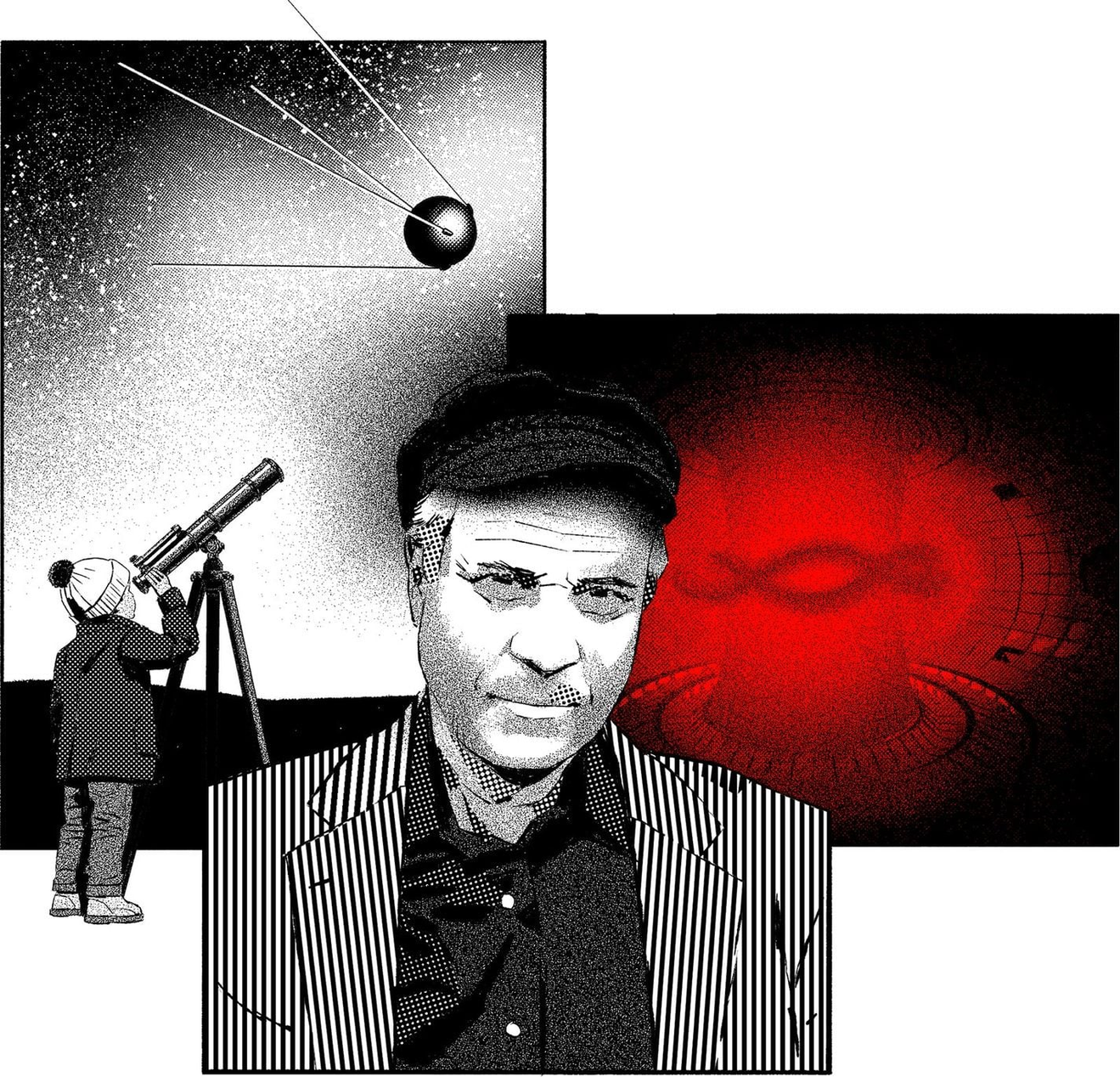
Zubrin was five years old and living in Brooklyn when the Soviet Union launched Sputnik, the world’s first artificial satellite, in 1957. The news shocked America and turned the space race into a national obsession. For Zubrin’s sixth birthday, his father bought him a telescope. From then on, he dreamt of living among the stars.
While waiting for humanity to expand across the solar system, Zubrin channelled his energies into chess, becoming a teenage prodigy. In 1969 he watched the Apollo 11 Moon landing from Leningrad, where he was competing in an international chess tournament. As Neil Armstrong stepped out of the landing craft, it was clear America had won. “All the Russians I knew were just amazed and thrilled,” recalled Zubrin. “How did you do this? How is this possible? It made a point. This is something free people can do.”
“People are saying we’re having our programme wrecked so that this fucking Bond villain can run off with his giant spaceship to Mars”
The politics of the cold war were never far from the Zubrin family dinner table. His father, descended from Russian Jews, was a centrist; his mother, from a Hungarian Jewish family, had been a communist. She belonged to the party until 1939, when she quit over the Molotov-Ribbentrop pact, whereby Stalin and Hitler agreed to carve up eastern Europe. But she remained a left-wing activist. Zubrin himself joined the anti-Vietnam-war movement as a student, before swinging rightward during the Reagan years.
Zubrin studied maths at the University of Rochester, then pursued graduate studies in nuclear engineering and aeronautics at the University of Washington. The early 1980s were an exciting time to be an engineer. Scientists were searching for alternatives to fossil fuels, spurred on by the energy crisis of the previous decade. Nuclear fusion, the reaction that powers the Sun, seemed especially promising. An act of Congress in 1980 committed America to trying to demonstrate the viability of nuclear fusion by the early 1990s.
Zubrin spent the summer of 1985 at Los Alamos National Laboratory in New Mexico, helping to develop spherical fusion reactors, a potentially more efficient alternative to the conventional doughnut-shaped tokamak. He remembers being captivated by the work: “Fusion was another open frontier, limitless energy. In grad school, I thought nuclear fusion would be the greatest thing to happen in my working life.” But Zubrin soon became frustrated with the lack of progress in the field. In his view, this was partly a consequence of the consolidation of international research programmes, which reduced competition between the scientists investigating different approaches.
He found his attention increasingly drawn to another frontier. In 1981 a group of space scientists had begun holding conferences in Boulder, Colorado, called “The Case for Mars”. Their aim was to rekindle public and scientific interest in the Red Planet, which had waned since 1976, when two robotic missions, both part of the Viking programme, found no clear evidence of life there. Zubrin attended the third conference, in 1987, which attracted more than 1,000 participants and featured speakers including Carl Sagan, a celebrity astronomer, and James Fletcher, the former head of NASA.
Zubrin was energised by the conference, deciding that working on Mars exploration would offer “much more creative freedom” than he had encountered in his career to date. He handed his resumé to Ben Clark, a manager at Martin Marietta, the aerospace company that had made the Viking spacecraft.
A year later, Zubrin had a job at Martin Marietta, working on the design of interplanetary missions. The company (which later merged with its competitor, Lockheed, to form Lockheed Martin) was based in Colorado, and Zubrin moved with his wife, Hope, a science teacher, to a house in the foothills of the Rocky Mountains. Their daughter, Rachel, was born in 1992.
When he wasn’t plugging away at his day job, Zubrin devoured books about the history of his adopted town, Golden, named after Thomas Golden, an aptly named 19th-century prospector. A title that made a particular impression was “The Great Frontier” by Walter Prescott Webb, published in 1952. Webb, an American historian, built on the “frontier thesis” put forward by another American historian, Frederick Jackson Turner, in 1893. Turner argued that the experience of settling America’s wild frontier fostered a distinctive culture of individualism, self-reliance and egalitarianism. Webb built on the idea, arguing that the discovery of the Americas had transformed Western civilisation by giving Europeans access to vast quantities of land and natural resources. The resulting economic boom, he believed, developed capitalism and “mothered” democracy.
For much of the 20th century, the “frontier thesis” shaped how Americans were taught about their country’s history. But Turner’s ideas gradually fell out of favour, as historians emphasised the violence inflicted on indigenous Americans and the substantial role played by the federal government in the American West, from army forts to prolonged military campaigns.
To read the full article, please click here.
Photographs: Matt Nager
Illustrations: Coke Navarro