By Lou Farrell, Senior Writer, Red Planet Bound
Mars rovers are among the most meticulously engineered machines ever built. Getting one to the Red Planet is only half the challenge, as the real test is keeping it alive once it’s there. Surviving on Mars demands that every component withstand conditions that would destroy ordinary machinery within hours.
This degree of readiness is achieved through a series of demanding tests designed to simulate the harshest environment any machine has ever been sent into.
Why Your Car Wouldn’t Last a Minute on Mars
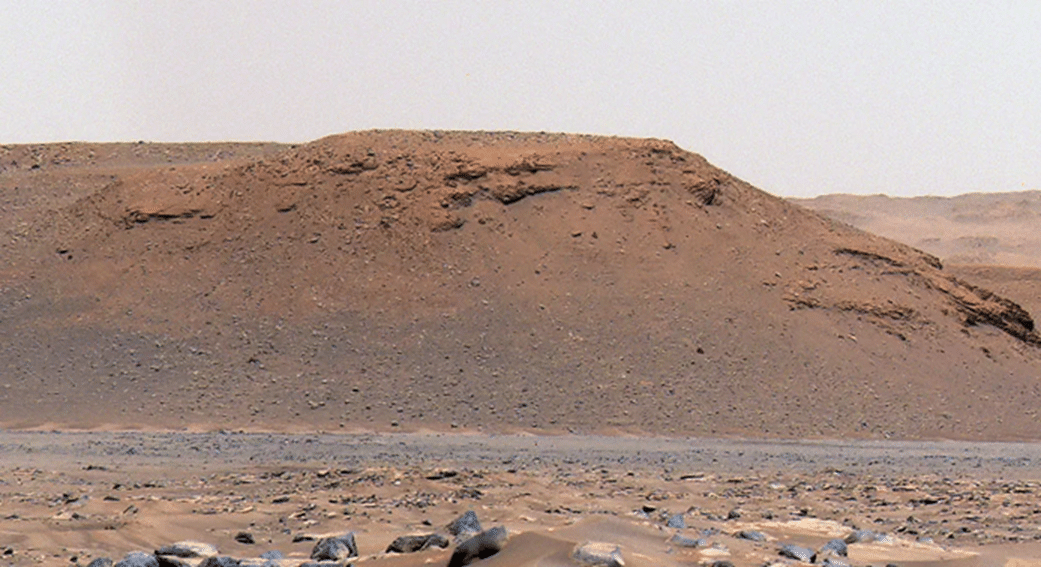
It’s easy to picture Mars as a dusty desert that’s remote and barren, but not impossibly hostile. The reality is far more extreme. A conventional car driven onto the Martian surface would be rendered useless within minutes, because every basic system it relies on is fundamentally incompatible with the conditions there.
Thin Atmosphere and Extreme Cold
Mars has an atmosphere roughly 100 times thinner than Earth’s, composed almost entirely of carbon dioxide. NASA’s Viking lander data recorded atmospheric temperatures as low as minus 178° Fahrenheit at just 1.5 meters above the surface.
Standard motor oils freeze long before those temperatures are reached, leaving pistons and bearings grinding against each other. Rubber seals crack, batteries fail and fluids that depend on atmospheric pressure to stay liquid evaporate.
Corrosive Soil and Dust
Martian dust is extraordinarily fine and laced with perchlorates, or reactive chemical compounds found across the entire surface. NASA’s Perseverance rover confirmed that perchlorate levels in the regolith range from 0.5% to 1%, a concentration that is highly reactive with other materials.
Those particles act like microscopic sandpaper, grinding at mechanical surfaces and infiltrating seals, electrical contacts and sensors. In December 2025, NASA’s Jet Propulsion Laboratory reported that Perseverance detected actual electrical discharge events as dust devils passed over the rover — a reminder of just how electrically active that fine dust can be.
Intense Radiation
Without a global magnetic field, Mars receives a relentless stream of solar and cosmic radiation. Measurements from the Curiosity rover put the surface radiation dose at roughly 230 millisieverts per year, well beyond what unshielded electronics can tolerate. A single charged particle passing through a standard semiconductor can corrupt data, trigger false commands or permanently damage circuits. A modern car’s onboard computer would not last long under that bombardment.
What Makes a Mars Rover Different?
A Mars rover shares almost nothing with consumer machinery. Every system aboard has been engineered to function within the conditions above — not to tolerate them briefly, but to operate through them for years.
Built for the Extremes
Rover components rely on dry, solid-film lubricants like molybdenum disulfide that retain their properties in vacuum conditions. Electronics are housed in a warm electronics box — a thermally controlled enclosure that uses internal heaters to maintain safe operating temperatures regardless of the ambient temperature. Passive thermal management using heat pipes is a preferred approach for planetary rovers because components that can operate without active intervention are far more reliable over a long mission lifetime.
The Power of Preparation
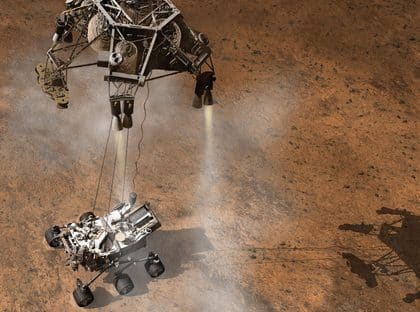
When a rover is millions of miles away and a signal takes up to 21 minutes to arrive, there is no calling for roadside assistance. Rovers carry backup systems for their most critical functions, such as dual computers, backup sensors and failsafe modes that allow the spacecraft to protect itself while awaiting instructions.
Those backups are a core design requirement for every set of Mars rover components. The question is never whether something might fail across years of operation. It is whether the mission can continue when it does.
Testing Rover Components for the Ultimate Road Trip
Good design is only the starting point. Before a single component is cleared for flight, it must survive a gauntlet of tests that push it well beyond what it will actually face on Mars. Failure during testing is recoverable. Failure during the mission is not.
Surviving the Launch — Vibration and Shock Testing
The first threat a rover faces has nothing to do with Mars itself. Rocket launches subject spacecraft to enormous vibration and acoustic loads, producing g-forces that can shake structural bonds apart, loosen fasteners and stress electrical connections in ways that are impossible to detect visually. Every component that flies to Mars must first survive this.
To replicate these conditions, engineers strap parts to electrodynamic (ED) shaker tables, which can generate oscillatory forces over a wide frequency range. The goal is to identify the point at which each component vibrates most intensely and confirm that no structural failure or electrical disconnection occurs.
ED shakers are best suited for advanced applications such as aerospace manufacturing, as they can sustain high vibration rates. Increasing a component’s longevity and reliability is a key part of the research and development process. For Mars missions that lack a repair crew, that dependability is mission-critical. Shock testing complements this by subjecting components to sharp impulse forces that simulate events such as pyrotechnic separation or hard-landing impacts.
A Taste of the Void — Thermal and Vacuum Testing
Thermal vacuum (TVAC) chambers simulate the airless, thermally extreme environment of deep space and the Martian surface. NASA operates these facilities across a range of scales, from small component-level chambers to room-sized structures capable of housing fully integrated spacecraft. Inside, air is evacuated to replicate space-like pressures, while powerful heaters and liquid-nitrogen-cooled shrouds cycle the temperature between extremes.
Components undergo multiple hot-cold cycles (sometimes over days or weeks) to expose weaknesses in materials that expand and contract at different rates. Adhesives delaminate, seals crack and circuit boards warp when material choices are mismatched. Functional tests run at each temperature plateau confirm that the hardware actually works under those conditions. ESA’s ExoMars rover underwent 18 days of TVAC testing that cycled through representative Martian sols, verifying that its integrated systems could repeatedly function across those transitions.
Shielding from Cosmic Rays — Radiation Testing
Radiation testing is among the most technically involved steps in the qualification process, because the damage it assesses is invisible and cumulative. Engineers expose electronic components to particle accelerators and gamma radiation sources to measure two types of threats. One is the total ionizing dose, or the gradual degradation that accumulates over years of exposure. The other involves single-event effects, or sudden disruptions caused by a single high-energy particle striking a circuit.
The processor powering Perseverance’s onboard computer, the RAD750, is a radiation-hardened variant of the PowerPC 750 qualified to withstand extremely high levels of ionizing doses. Ordinary consumer electronics fail at a tiny fraction of that level. Radiation hardening is baked into the chip design at the transistor level, which means the RAD750 runs at just 110–200 MHz, which is far slower than a smartphone. Designers accept that trade because reliability across a multi-year mission outweighs raw processing speed by a wide margin.
Driving Blind — Navigation and Software Simulation
Physical hardware is only part of the picture. Rover software must be tested to operate safely in an environment its developers will never observe in real time. A radio signal traveling between Earth and Mars takes anywhere from 4.5 to 21 minutes, depending on planetary alignment, making direct control impossible.
JPL’s robotics team used the Robot Operating System to prototype and test Enhanced Autonomous Navigation algorithms for Mars 2020 in simulation before any physical hardware was involved. This enabled rapid iteration before porting the software directly into the flight system.
From there, software moves to physical testbeds, characterized by Mars-like sandboxes filled with rock, sand and simulated regolith. ESA operates a Mars Yard at its European Space Research and Technology Center in the Netherlands, where a half-scale rover prototype autonomously traversed a rock-strewn 9-by- 9-meter sandbox to validate hazard avoidance software.
The results are measurable. As of October 2024, Perseverance had completed approximately 90% of its total travels using autonomous navigation, a figure that would have been unthinkable in earlier rover missions.
Ready for the Red Planet
Every shaker table run, vacuum cycle and radiation bombardment is an investment in certainty. This is a guarantee bought in a lab, so it does not have to be earned the hard way on another planet. The testing process is what transforms ambitious engineering into a machine that actually works on its own, millions of miles from anyone who could fix it.
The standards set today for surviving on Mars will ultimately determine what it looks like when people get there.
Author’s Personal Note: Ready to take the Mars rover driver’s license test? If not that, hopefully you at least have a better understanding of just how much time, effort, and care goes into ensuring that Mars rovers function as intended while able to hold up through continuous use so that they can fulfill their vital roles.
To read other Red Planet Bound blog articles, please click here.
Images: NASA/JPL-Caltech/MSSS