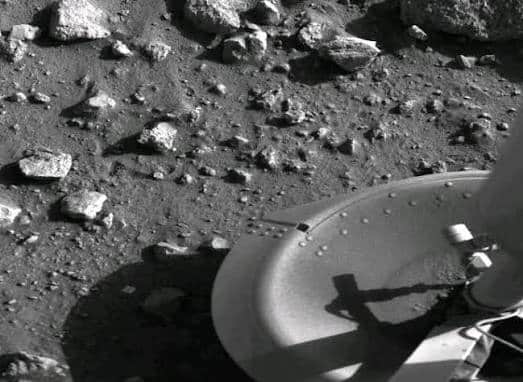
July 20, 2026 marks the 50th anniversary of NASA’s historic Viking 1 landing on Mars—a landmark achievement that forever changed the course of planetary exploration and humanity’s vision for the future.
When Viking 1 successfully touched down on the Chryse Planitia region of Mars on July 20, 1976, it became the first spacecraft to achieve a successful landing on the Red Planet and conduct extended scientific operations from its surface. Over the years that followed, Viking 1 transmitted thousands of images, analyzed the Martian atmosphere and soil, searched for evidence of life, and dramatically expanded our understanding of Earth’s neighboring world. For the first time, humanity could study Mars not as a distant object through telescopes, but as a place with its own landscapes, weather, geology, and history.
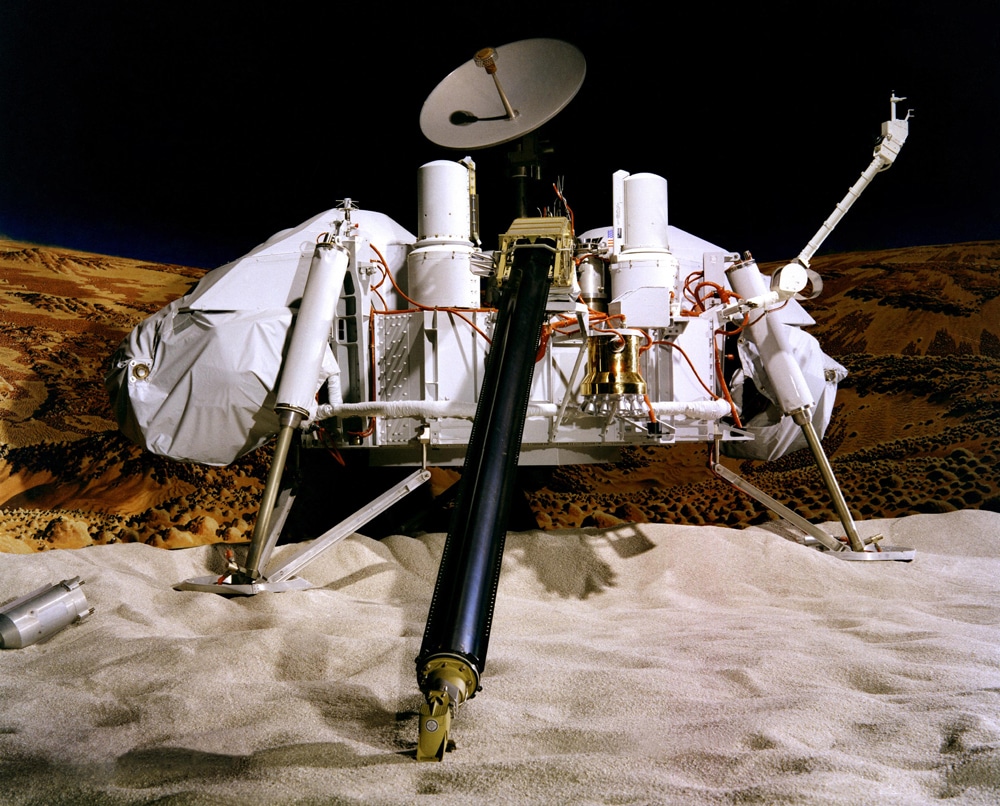
The Viking program represented far more than an extraordinary engineering accomplishment. It marked humanity’s first genuine step toward exploring Mars as a destination. The technologies pioneered, the scientific discoveries made, and the lessons learned from Viking became the foundation for every successful Mars mission that followed—from Pathfinder and Sojourner to Spirit, Opportunity, Phoenix, Curiosity, InSight, Perseverance, and Ingenuity.
Today, as NASA and private industry prepare for human missions to Mars, the legacy of Viking 1 remains more relevant than ever. The mission demonstrated that landing safely on Mars was possible, opening the door to five decades of exploration that have steadily moved us closer to the ultimate goal of sending people to the Red Planet and establishing a permanent human presence there.
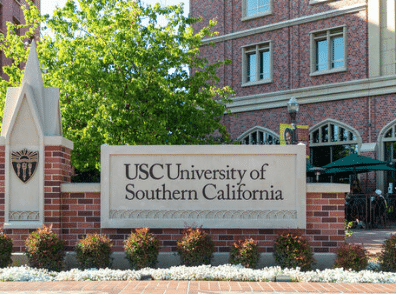
Even five decades later, Viking 1 continues to spark scientific debate. Some researchers believe the mission may have detected evidence of life on Mars—a provocative possibility that remains unresolved. The Mars Society will revisit this fascinating question during the 2026 International Mars Society Convention (October 22–24 at USC), where renowned astrobiologist Dr. Steven Benner, author of the new book, Meet the Neighbors: Life on Mars and How to Find It, will discuss new perspectives on the Viking findings and what they may mean for the search for life on the Red Planet.
“The Viking 1 landing was one of the defining moments in the history of space exploration,” said James Burk, Executive Director of The Mars Society. “It transformed Mars from a mysterious world into a place we could explore with confidence. Every rover that has rolled across the Martian surface, every scientific breakthrough we’ve made, and every serious plan to send humans to Mars traces its heritage back to Viking. Fifty years later, we’re no longer asking whether we can reach Mars—we’re preparing for the day when people will live and work there.”
Since its founding in 1998, The Mars Society has championed the cause of human exploration and settlement of the Red Planet. Inspired by pioneering missions like Viking, the organization continues to advance research, public education, international collaboration, and Mars analog programs that help prepare humanity for the challenges of becoming a multi-planetary civilization.
As we celebrate the 50th anniversary of Viking 1, we honor the scientists, engineers, technicians, and visionaries whose dedication made the mission possible. Their achievement ignited a new era of Mars exploration and inspired generations to dream bigger.
The first footprints on Mars have yet to be made, but the path leading there began with Viking 1. Half a century later, that remarkable mission continues to guide us toward humanity’s next giant leap.