By Lou Farrell, Red Planet Bound, 12.10.15
The dream of setting foot on Mars has never been closer. Thanks to advanced technologies and analog missions, serious plans for human missions are underway. These simulations push the boundaries of human endurance and adaptability, demanding incredible fitness and mental fortitude. Could you tackle these formidable challenges to survive a year on Mars?
Exploring Mars Analog Missions
Mars analog missions replicate critical aspects of living on the Red Planet to help future crews understand what to expect. Here are the main objectives of Mars analog missions.
Practical Planning
Scientists use analog missions to bridge the gap between theoretical planning and the reality of a year on Mars. Mission planners can tailor spacecraft and life support systems on paper, but implementation for humans is another ballgame. Engineers must go beyond theory by creating critical testing grounds.
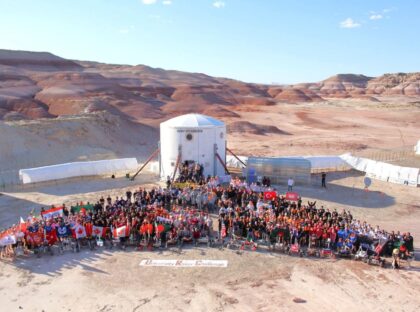
The planning stage requires coordination between scientists, mission planners and engineers. These professionals determine the goals and select appropriate analog sites. Isolated and extreme environments are ideal for missions because they replicate the lack of breathable air, gravity and radiation. Astronauts may head to Utah (the Mars Desert Research Station), the Arctic (the Flashline Mars Arctic Research Station) or a dozen or so analog sites around the world, with more being established every year.
Learning Human Response
Mission planners observe participants once they arrive at the analog sites. Direct observation, self-reporting and physiological monitoring are critical to understanding how their teams respond to the unique environmental stressors found on Mars. For example, researchers say Martian dust can cause lung irritation and diseases. Therefore, the planners may focus on dust filtration and cabin cleaning.
Besides physiological health, mission planners observe psychological health by measuring mood, stress and motivation. These characteristics may indicate signs of anxiety and depression, so they’re worth monitoring. Astronauts can expect structured debriefings and meetings to provide insights into their experiences.
Fixing the Bottlenecks
Analog sites provide insights into what needs improvement before the astronauts spend a year on Mars. Operational bottlenecks could slow things down, affect crew performance and strain resources. For instance, if the crew experiences malfunctioning water recycling systems or time-consuming meal preparation, they need stronger solutions before a real mission.
Other bottlenecks can occur with technological devices. Mars-Earth time lags could demonstrate limited bandwidth during simulations, thus hindering mission control’s support. The astronauts may need help with equipment maintenance and repairs if parts consistently break down. A lack of spare parts can stall progress and increase the crew’s workload.
Simulating Food Production
Packing a year’s worth of food for a Mars trip is challenging, so the crew must simulate food production to gain insights. The mission planners incorporate food-related experiments to prepare astronauts for the complexities of Mars. Limited resupply and resource recycling opportunities are some obstacles they may experience.
The analog site may feature hydroponic and aeroponic systems to adapt to soilless conditions. These agricultural strategies use nutrient-rich water to grow crops indoors, whether in growth chambers or greenhouses. Crew members may grow lettuce, tomatoes and radishes for their daily meals. The simulation also tests how astronauts manage resources and their ability to support a closed-loop approach.
How Analog Missions Mimic a Year on Mars
While precise conditions on Mars are challenging to emulate, mission planners train astronauts to establish routines and manage interpersonal dynamics. Here are a few essential components of Mars analog missions.
Crafting the Habitat Layout
Designing the habitat layout requires meticulous planning and replicating operational demands. The site must be realistic and safe while supporting rigorous scientific study. Key considerations include space efficiency and life support integration. For instance, the mission planners must optimize bunks to maximize privacy without compromising space.
The habitat also includes waste management systems and water recycling mechanisms. Astronauts can perform hands-on maintenance with these components as they would on Mars. Airlocks and extravehicular activity (EVA) readiness are other critical analog site necessities. The engineers install airlocks as transition areas before leaving the enclosed space for EVAs.
Understanding Equipment Utilization
Analog missions are the testing grounds for space-age equipment and technologies, and thus the technology must be able to survive prolonged exposure to harsh planetary conditions.
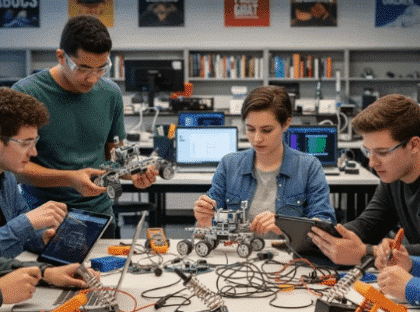
One such technology is printed circuit boards (PCBs), which are essential in Mars-relevant equipment and robotics because they support rovers and environmental monitoring systems. Experts say PCBs can experience unpredictable malfunctions due to debris particles, which inhibit performance. Debris particles of this nature can be an ever-present threat on a planetary exploration mission. Astronauts dealing with the intense conditions on Mars can respond by applying compressed air or electronic component vacuums as preventative measures.
Analog sites also test environmental monitoring systems to ensure safety and habitat integrity. From air quality to radiation, these conditions must match life on the Red Planet. Mars typically reaches -100 degrees Fahrenheit in the lower atmosphere, so astronauts must be ready for extreme weather.
Here are a few other vital tools and systems liable to face issues with the conditions on Mars, that require adequate testing for a year on the Red Planet:
- Water filtration systems
- EVA suits
- Energy storage systems
- Habitat structural materials
- Mars-Earth communication devices
Optimizing Emergency Preparedness and Responses
Emergency preparedness is vital because space crews are isolated and cannot access immediate rescue. To test responses and technological reliability, these tests simulate emergencies like fires and equipment failures. Before entering the analog site, the crew members may undergo first-aid and fire suppression training. Their drills may include surprise simulations requiring rapid evacuation.
These trainings build confidence and teach astronauts how to react to real-life scenarios. While emergencies can be terrifying, they enhance the crew’s ability to diagnose issues and coordinate responses. They must be ready to tackle anything from communication blackouts to injuries. Mission planners help participants develop skills by providing limited tools and spare parts, thus emulating Mars missions.
The Astronaut’s Perspective in Mars Analog Missions
Mars analog missions push astronauts outside their comfort zone. Experts say the expedition will require about nine months, so participants must adapt to the tight quarters and get comfortable with their new mates. Since privacy is limited, factors like teamwork become critical.
Learning Structure and Teamwork
Analog sites have highly structured days, so team members must adjust to daily mission needs. They may have strict wakeup times, meal schedules and scientific tasks. For example, a regular day could include collecting rock and soil samples, troubleshooting robots or cultivating plants. Mission planners meticulously craft the schedule to maximize efficiency and promote health.
Living on Mars for a year — even in an analog site — requires solid teamwork. The location’s tight confines require clear communication, mutual support and cooperation. Astronauts work together to repair equipment, conduct experiments and prepare meals. The crew may have conflicts, so resolutions are essential to address them constructively.
Filling Space With Downtime
Astronauts have set schedules for much of the day since they’re on the clock. However, a year on Mars means they need free time and hobbies to boost morale. Analog participants have limited access to the outside world, so they must make the most of their time with cohorts. For example, they may have movie nights, board games and community dinners to break up daily routines.
While group activities can build morale, astronauts also need privacy. Reading and journaling are accessible hobbies that require minimal space. On-site educational opportunities exist, and some astronauts may start learning instruments or languages. The analog site may also have dedicated fitness areas with treadmills and yoga mats to promote exercise.
Simulating Life on Mars in Analog Sites
Spending a year in an analog site tests more than technologies. These simulations are critical to revealing human adaptability and resistance. Mission planners carefully craft these locations to optimize scientific research and resource management. Meanwhile, human elements like social dynamics and teamwork also play a role. The insights will help astronauts when they conduct actual Mars missions.
Author’s Personal Note: So, there you have it! Think you could tackle the challenge of a year on Mars (or a simulation of the Red Planet)? It sounds like such an exciting venture, doesn’t it? A year is quite a long time, though, and I can certainly think of a few people in my life that sharing such close quarters for 365 days would be a struggle. But, there’s plenty of people I’d love to do that with too. It’s interesting to think about, isn’t it?