By Dr. Robert Zubrin, Quillette, 03.05.26
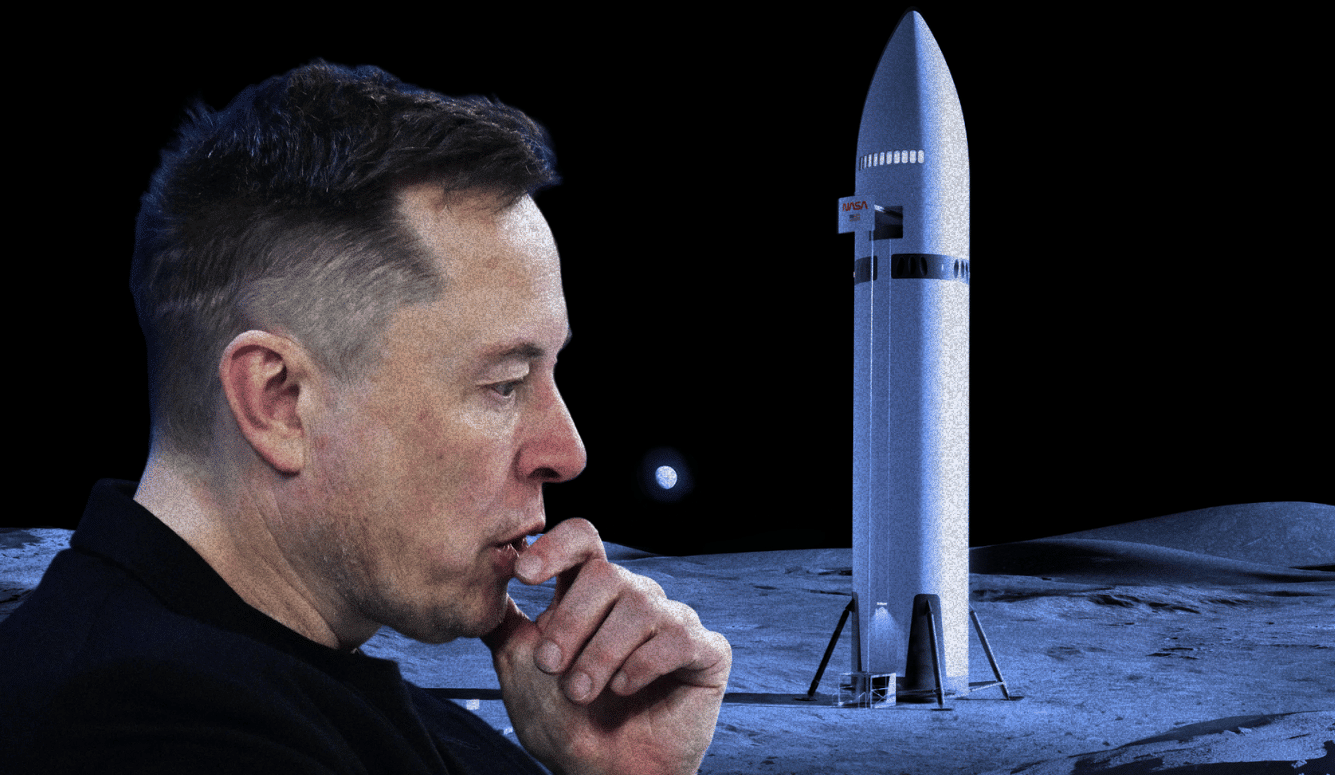
On 8 February, SpaceX CEO Elon Musk tweeted:
For those unaware, SpaceX has already shifted focus to building a self-growing city on the Moon, as we can potentially achieve that in less than 10 years, whereas Mars would take 20+ years.
The mission of SpaceX remains the same: extend consciousness and life as we know it to the stars …
That said, SpaceX will also strive to build a Mars city and begin doing so in about 5 to 7 years, but the overriding priority is securing the future of civilization and the Moon is faster.
If Musk actually attempts to deliver on his words, he will be making the biggest mistake of his life. It is impossible to build a self-growing city on the Moon because many of the materials needed to support life—let alone technological civilisation—do not exist there. Those that do are present in forms that make their transformation into useful resources vastly more difficult than is the case on Earth or Mars.
Why the Moon is Unsuitable for Settlement
We ourselves are made of carbon compounds, as is everything we eat or wear and most of the things that we use. There is no carbon on the Moon. The other primary components of life are water and nitrogen. But with the exception of ice deposits in permanently shadowed, ultracold (-230° C) craters near the lunar south pole, water is only present in lunar soil in parts per million quantities. If there were concrete on the Moon, lunar colonists would mine it to extract its water content. Nitrogen is entirely absent.
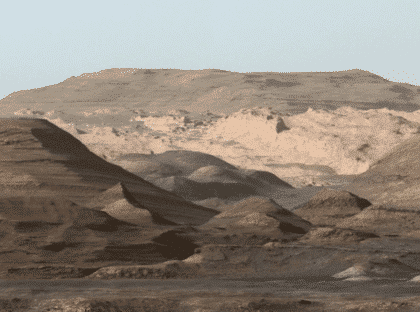
By contrast, in addition to its polar ice caps, Mars possesses continent-sized regions of frozen mud that are sixty percent water by weight, as well as massive glacier formations of pure water ice in its northern hemisphere that extend as far south as 38° N—the latitude of Athens on Earth. Carbon and nitrogen are readily available everywhere, since Mars has an atmosphere that is 95 percent CO2 and 3 percent nitrogen.
The Moon does possess some oxygen, but it is in the form of rock, and the complex processes needed to extract it require both a lot of energy and very high temperatures that limit the lifetime of the necessary equipment. It is hard but possible to extract lunar oxygen from regolith and developing the technology and facilities to do so would pay off for any lunar base program. But on Mars, water and CO2 can readily be used to produce oxygen at room temperature via photosynthesis, water electrolysis, or other simple chemical engineering techniques that could be used on the very first human mission.
Unlike the Earth or Mars, the Moon has no history of hydrological activity. It therefore has no concentrated mineral ores, which are necessary for the practical extraction and production of useful metals and other chemicals. The average concentration of copper on Earth is only sixty parts per million. Yet people have made extensive uses of it since the Bronze Age because natural processes have concentrated it into useful ores. We also have vast amounts of nearly pure silica sand, highly enriched iron and aluminium oxides, and salt deposits. Mars was once a warm, wet planet, so it has enriched minerals, too. But no such substances exist on the Moon, which is just a vast pile of trash rock. This is a very important point, which we shall return to later.
To make matters worse, since the Moon has no atmosphere to shield it from solar flares, any plants grown there would have to be raised in underground greenhouses illuminated by electric lighting, generated at great expense by nuclear reactors or solar panels. By contrast, although the Martian atmosphere is thin, it is thick enough to protect against solar flares. This would allow plants to be grown on the Martian surface in thin-walled greenhouses, using natural sunlight to drive photosynthesis. This is very important, since plants need a lot of light. For example, to generate enough light to illuminate the entire state of Maryland (32,000 square km) you would need 32,000 gigawatts, roughly three times that currently generated by the entire human race.
Furthermore, while the Moon is closer to Earth and you can get there faster, the rocket propulsion requirement to travel one way from low-Earth orbit to the lunar surface is fifty percent greater than that needed to go to Mars. Rocket propulsion requirements are not determined by the distance travelled, but by the velocity change—the “delta-V”—that the mission requires. It takes 6 km/s of delta-V to travel from low-Earth orbit (LEO) to the surface of the Moon. But because Mars has an atmosphere, which can be used to decelerate an arriving spacecraft without the use of rocket propellant, it only takes 4 km/s of delta-V to go from LEO to the surface of Mars. The amount of propellant needed to accomplish a mission increases exponentially with the factor of delta-V divided by the rocket’s exhaust velocity, which for the SpaceX Starship is 3.7 km/s. So this difference matters a lot.
But in fact, it’s even worse than that, because it would be far more difficult to make the propellant for the return trip on the Moon than on Mars. The propulsion requirements for a lunar roundtrip would therefore be triple those for a Mars mission. If we accept SpaceX’s numbers, the Starship will weigh 100 tonnes and be able to transport another 100 tonnes to orbit, therefore a Starship travelling to the Moon with 100 tonnes of cargo and returning empty would need to be refuelled in space using fourteen tanker Starship flights. Even if the Starship only travelled one-way, or lunar oxygen were available to support the return flight, it would still take eight Starship tanker launches. The same roundtrip to Mars would only need four tankers.
To read the full commentary, please click here.