By Amie Kaufman, Red Planet Bound
The first time I handed a manuscript to an astrophysicist for a fact check, she returned it with about twenty-five pages of typed notes, many of which were ALL CAPS. It turned out movies have a quite lot to answer for when it comes to the average person’s understanding of space. It was, to say the least, the beginning of a journey. I’d grown up loving Star Trek and reading Clarke and Asimov and McCaffrey, but as I ventured into sci-fi on my own behalf, I was determined to expand my knowledge.
I’ve certainly done that since that day—though I’ll still defend the movies! A surprising number of the scientists and engineers I’ve met at various space agencies trace their origin story back to exactly that kind of storytelling. This feels only fair, because we artists are constantly borrowing inspiration from what they’re doing in the real world, as you’ll soon see.
I’d love to give you a glimpse inside the evolution of a story idea that became a book—one set on Mars, and inspired by a visit to NASA.
After I published the book that earned those all caps notes (which I actioned, fear not!) I ended up hearing from some folks at NASA, who enjoyed both the science and the story. This is, of course, about as validating as it gets for a sci-fi author! A friendship grew out of that connection, and I’ve always particularly enjoyed the fact that everybody thought they had the better end of the deal. To the scientists: wow, a New York Times bestseller! To the author: whoa, actual rocket scientists! (We all know I was right.)
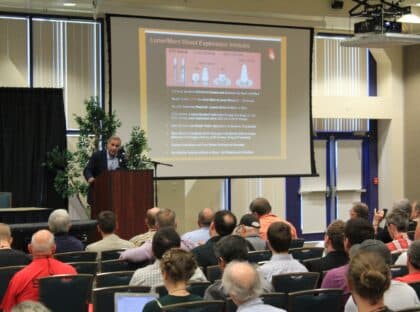
The idea for my latest book—Red Star Rebels—was born during a visit to JPL in 2016. I brought some author friends, and we had a blast taking a backstage tour. The old landing craft were amazing. Ditto the control room. Honestly, ditto the experience of just walking around a place where so many impossible things have been made routine. It’s enough to make your brain fizz.
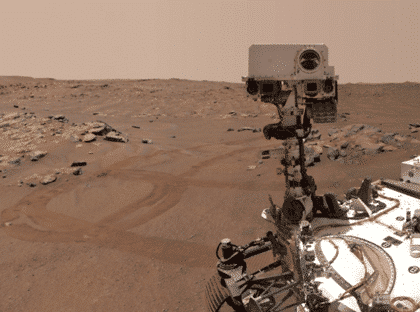
But what really got me was the pile of rocks and dirt. Not just any rocks and dirt! This dirt was textured to replicate regolith, and the field was set up to replicate the Martian surface, so the team could consider how best to navigate rovers in a lower-stakes environment than their eventual destination. Better to get bogged down here, where there’s somebody to get out and push.
I spoke to various scientists and engineers about the difficulties of replicating the terrain—no point in practicing climbing a hill made out of dirt that behaves the wrong way when you drive over it—and about the general problem of dust. The way it gets everywhere, and into everything. The way it can’t be underestimated during the design process, or it’ll find a way to bite you. The issue of dust storms.
The dust storms made something go ping in my brain. What could you get up to, I wondered, if the view of you from above was completely obscured? It was the start of an idea.
The most common question any writer hears is where do you get your ideas? For me, the answer is that they don’t usually arrive fully formed. They arrive in pieces. I gather up little sparks of inspiration, and interesting facts or questions, like pieces of coloured glass. When it’s time to write a new book, I lay out my pieces to see how they might fit together, which ones might belong in the same picture, and to find out what’s missing. Sometimes I hold onto them for a decade, waiting for their time to shine.
That particular piece of glass—the dust storms—sat there for a long time, waiting for its companions to show up. Over the next few years I kept adding to the pile. I listened to NASA podcasts. I read up on regolith simulant projects. I read non-fiction like Robert Zubrin’s The Case for Mars, and novels like Andy Weir’s survival epic The Martian, Mary Robinette Kowal’s alternative history of the space race, the Lady Astronaut series, and Natasha Pulley’s dazzlingly speculative The Mars House.
Another brightly coloured piece of glass that arrived was the way space travel was evolving, with private interests entering the picture, and corporate launches taking place alongside nationally sponsored blast-offs. I began to think about the big decisions we have on our horizon—about how we’ll go to space, and for whom. Will it be for all mankind, or will it be every man for himself?
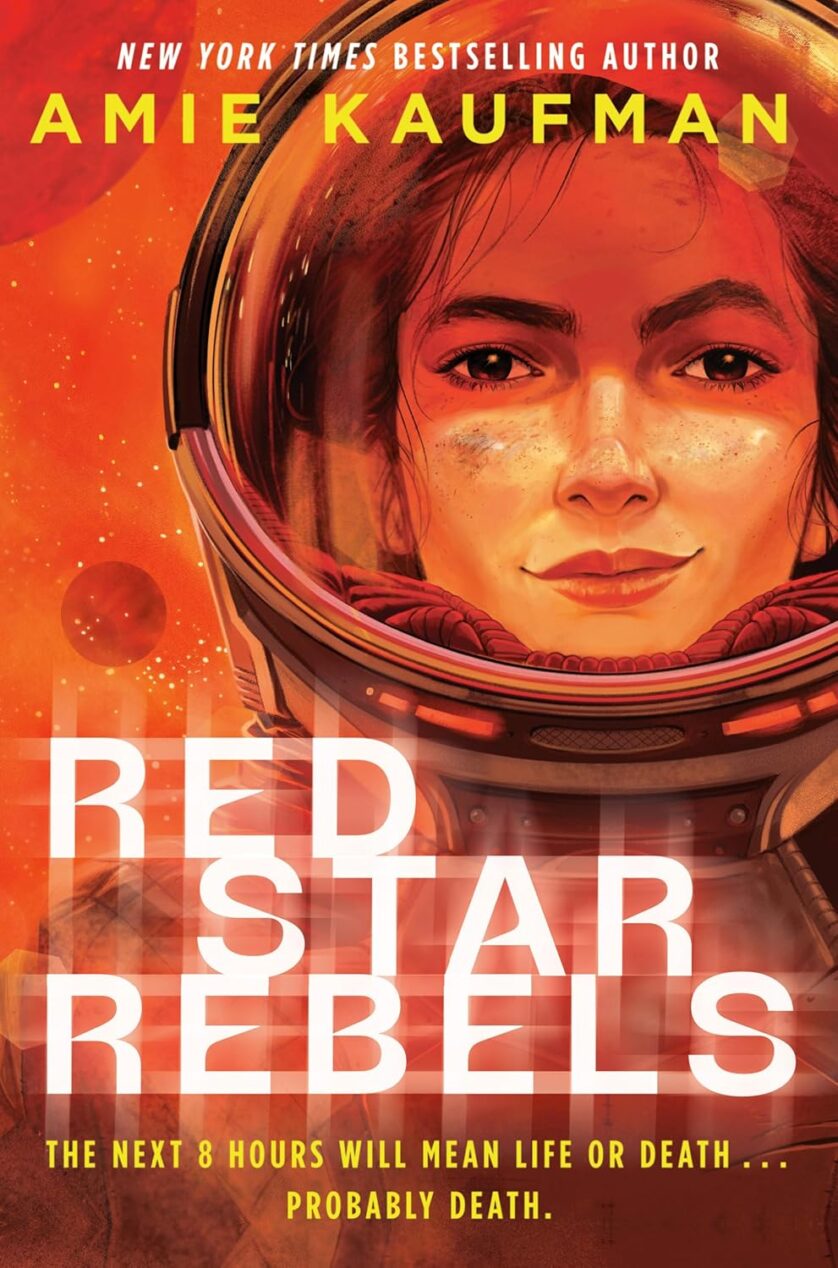
I believe a book can be more than one thing at once. Red Star Rebels is first and foremost an action-adventure story—imagine the movie Die Hard set on Mars. But it also asks a very big question, and one we’ll need to answer soon.
It features the grandson of the man who first settled Mars, a boy who’s grown up with immense privilege. Alongside him, a girl who stowed away to reach Mars illegally, one of the masses who’ve been excluded from access in this imaginary future.
I trap them together on the United Nations’ Mars base, which is evacuated, with the pair of them left behind. I bring in—finally, I know what this piece of glass is for!—a dust storm that means they’re totally unobserved. And then I have the mercenaries arrive. The evacuation was a cover. Greater corporate and political games are afoot. If the UN base falls to a takeover, the dynamics of this future Mars will change forever—and more importantly for our stranded pair, they won’t be alive to see it.
As an author, I really enjoyed the tension of setting these two characters up to each represent everything the other thinks is wrong with the world—and then forcing them to work together. It means they get to argue, and coming from two entirely different backgrounds and points of view, they have plenty to argue about.
Of course, in the background, I had to make sure I put the science in my science fiction. In creating the under-funded UN base, I had to figure out cheap radiation shielding options, think about water recycling, the greenhouse, and so much more. (Yes, it matters that the fish on the base are tilapia—they’re very well suited to the assignment. Also, isn’t it interesting that we can find it soothing to watch them swim, and yet also happily eat them?) I had to think about gravity—both how it’d affect my fight scenes, and also how it might impact plans to return to Earth, after time in low-grav. And so much more. You can bet there was fact-checking!
Heading to Mars will be an adventure—no one reading this needs convincing of that. One of my jobs as a sci-fi author is to invite readers along for the ride, whether they already know their regolith from their radiation shielding,[1] or whether they’re just beginning to imagine it. It’s been a real joy, to have so many different types of reader blast off with me this time.
Bio: Amie Kaufman is a New York Times, USA Today and internationally bestselling author, whose award-winning books have been translated into nearly thirty languages. She has sold well over a million books set in space. The first two chapters of Red Star Rebels can be found as an e-book or audiobook sample here: https://thenerddaily.com/red-star-rebels-by-amie-kaufman-excerpt/.
[1] Ha, got you! One of the best forms of radiation shielding is in fact to bury your base underground, so one might argue that regolith and radiation shielding are one and the same. You probably knew that.