By Lou Farrell, Senior Writer, Red Planet Bound
Mars mission electronics will require more protection than much of the objects humans have sent into space. While many rovers and satellites have flown into the unknown, long-term traversal of the Red Planet will require innovative solutions to shield against solar radiation on Mars.
A handful of tests have informed experts about how to pursue more effective technologies and methods, though every concept is still subject to refinement, especially as this proves to be humanity’s most intense and challenging destination yet.
Radiation-Hardened Processors
All electronic systems are vulnerable to the intense radiation Mars experiences, and processors are one of the most important components to protect. They are the brains behind every tool, facilitating consistent communications and flight controls, among other features. If this gets damaged, the entire machine is at risk of failure.
Its significance is why engineers have forged hardened processors to withstand harsh radiation. These are some of the techniques that safeguard processors:
- Insulating substrates are installed during manufacturing. They are made from materials like sapphire to reduce the impact.
- Installing additional transistors for even more checks and balances in the circuitry.
- Having error-correcting codes (ECCs) to fix radiation-induced issues in the memory.
The Mars Reconnaissance Orbiter is a famous example of equipment with a hardened processor, the BAE Systems RAD750.
Field-Programmable Gate Arrays (FPGAs) With Redundancy
FPGAs are reconfigurable chips used for digital signal and image processing that operators can adjust remotely to better adapt to immediate environmental conditions. However, this malleability can make them more susceptible to performance errors, especially when affected by radiation.
To ensure these continue to operate and respond to remote commands, triple modular redundancy (TMR) mechanisms are employed. This is a type of logic implemented three times on an FPGA. The redundancy adds security and sustains connectivity even if it partially fails.
In 2013, experts at the Massachusetts Institute of Technology were the first to design this concept in the Xilinx Virtex-5QV, a radiation-hardened FPGA. It has since been used on several space missions for its effectiveness.
Multilayer Radiation Shielding
Individual fixtures need to be engineered to resist radiation, but all Mars mission equipment requires comprehensive shielding around the entire structure as an additional layer of security. This is more complex than simply adding several layers of a radiation-resistant material that absorbs or deflects radiation. It must also reduce its intensity before it reaches sensitive electronics.
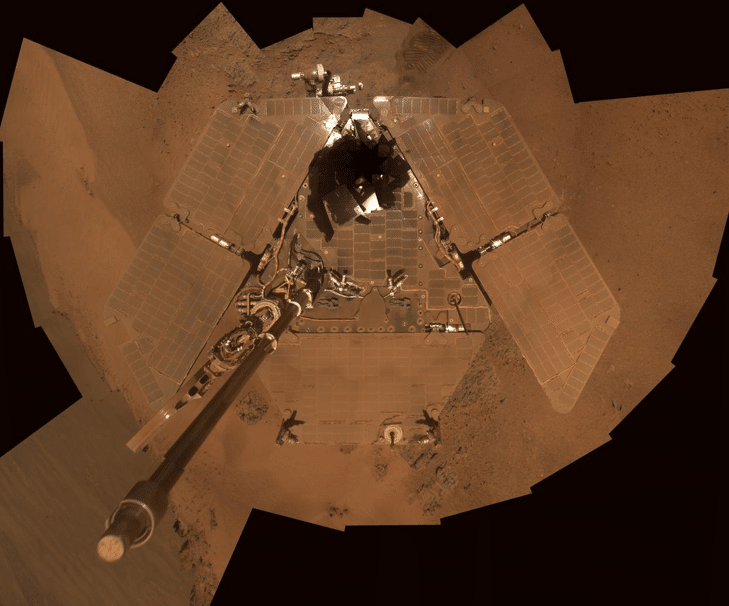
Aluminum has become the most widely known and default material for multilayer shielding, with researchers actively testing different coatings to make it even more effective. However, the aluminum is often sandwiched in layers among other, harder materials like tungsten. The layering prevents radiation from directly impacting electronics, and each material provides unique features, such as diffusion and blocking potential, to help protect them.
Fault-Tolerant Computing Systems
Creating a foolproof computer system is impossible, and aerospace experts realized this soon enough to construct technology with a different mindset. Instead of attempting to prevent all mishaps, computing systems have become better at noticing and identifying faults.
Then the system can have preprogrammed recovery strategies based on the issues that arise. It keeps the computers functional despite radiation, even if systems are temporarily compromised, by repairing itself. Fault tolerance requires:
- Hardware redundancy to defer to another component in the event of failure.
- Remote system health monitoring systems for constant oversight.
- Multiple software programs to run in parallel if issues or updates are necessary.
Having several features in place to protect the rest of the system creates a more reliable machine from both mechanical and software perspectives.
Watchdog Timers
A watchdog timer is a hardware component that periodically resets devices according to their assigned parameters. It has several failsafes.
First, it can reset mechanisms on a timer, resetting components periodically to keep them refreshed and updated. If the software crashes, it cannot trigger the watchdog timer. But, eventually, the timer will expire and trigger a system recovery. These have gotten even better, as some have incorporated machine learning to further mitigate performance errors.
The best way to make these work is to keep them external to the rest of the system rather than embedded. Having them run on an external power source and clock means they can operate even if the rest of the components are faulty.
ECCs for Memory
ECCs are vital to radiation-hardened processors for many reasons, but one of the most important is their role in protecting memory. Radiation can corrupt data easily, leading to software crashes and information gaps.
To prevent data loss and faults, ECCs operate algorithmically to add redundancy to data before it is stored. The bits these codes add help receiving machines understand if any piece of information has been affected during transmission or storage.
These redundant bits added to the data allow the computer to detect errors more effectively. Several types of codes are used for periodically observing the memory, and more are being introduced as technology modernizes, including:
- Hamming codes
- Hadamard codes
- Reed-Solomon codes
- Bose-Chaudhuri-Hocquenghem codes
Gallium Nitride (GaN) Electronics
More experts are relying on the properties of GaN, particularly in semiconductor applications. Silicon wafers have been the go-to for many years, while GaN has surprised engineers with its radiation-resistant qualities. Because semiconductors are the lifeblood of countless components, including motor controllers and electrical converters, they can reinforce many parts that have previously been ignored, simply by stabilizing the semiconductor with GaN.
Previously, engineers used silicon for its efficiency and thermal tolerance. However, it would need additional manufacturing attention to make it resistant to radiation. Eliminating the need for semiconductor hardening leaves engineers more room to optimize the performance of individual components, while gaining the benefits of inherent resistance.
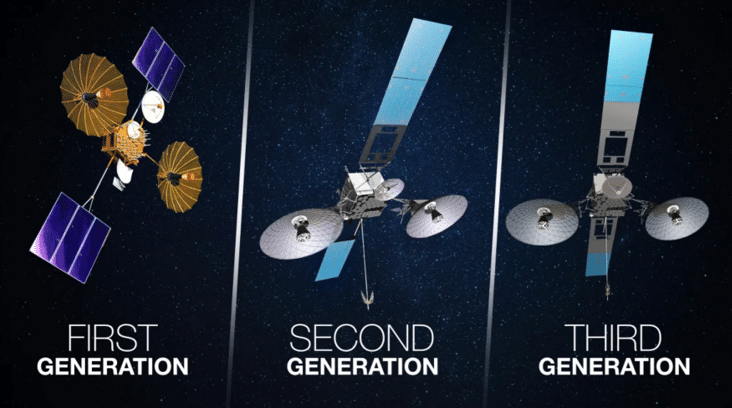
One satellite has already proven GaN’s worth, and it could be invaluable for the future of Mars missions.
The Alphasat telecommunication satellite has been a six-year experiment with the material, using GaN-powered transistors as it hangs in geostationary orbit. It has been effective for this length of time, which is helpful for the inevitably lengthy Mars missions humanity will endure.
For many years, satellites have relied on radio-frequency printed circuit boards to maintain consistent high-frequency communications by preventing noise. Incorporating GaN keeps these reliable yet old methods of crafting resilient aerospace tech alive, while enhancing them with modern innovations and materials.
Silicon-on-Insulator (SOI) Technology
While semiconductors may be phasing out silicon in favor of GaN in high-power and high-frequency applications, that does not mean silicon no longer has a place in aerospace as a reliable material for radiation protection. SOI technology is the reason it is a viable option, making previously vulnerable devices strong against its effects.
SOI technology is used in many technologies, including integrated circuitry and many other devices, like processors. Thin layers of silicon can work alongside a silicon substrate and other layers of material to make quality insulation for aerospace components.
Resisting Solar Radiation on Mars
To secure all Mars mission electronics, engineers and astrophysicists alike will need to collaborate to design the ultimate shield tailored to the planet’s atmosphere and climate. Once humanity sets foot on the Red Planet, experts will learn more about how to better resist the rays.
Therefore, every piece of electronic equipment after the first will have more knowledge informing its construction, becoming even better protected with each subsequent mission. Eventually, humans could block virtually all radiation, making the exploration of Mars even safer.
Author’s Personal Note: Whether from inexperience or from a distracting abundance of excitement, it can be tempting to think the only problem to be solved for planetary exploration and colonization of Mars is the lack of breathable air. In reality, that may be one of the simpler challenges to tackle compared to some of the other hurdles to overcome.
Still, isn’t it exciting to know that so many innovations are taking place to conquer these various aspects, one step at a time?
Images: NASA, Caltech, JPL, Dave Ryan