By Lou Farrell, Senior Writer, Red Planet Bound
There has been a recently-renewed focus on lunar exploration as of late, best exemplified by the Artemis II mission, which began on April 1, 2026 and lasted nine days. The mission garnered worldwide interest and acclaim. On a surface level, one can understand the appeal of prioritizing lunar exploration, as the Moon provides a controlled environment near Earth for testing technologies and strategies under real space conditions.
Thankfully, that same factor also lends itself to benefits towards Mars exploration. What works on the Moon may, indeed, scale to the greater challenges Mars poses.
How the Moon Can Be Practice for Mars
The logistics of reaching Mars present substantially more difficult conditions than returning to the Moon. A trip to Mars consists of a month of travel each way, as well as extended surface operations.
Systems are tested on the Moon with lower risk, as astronauts can return relatively quickly if needed, and resupplying is simpler. The Moon’s close proximity provides more opportunities for testing and refining. By using it as a testing ground, strategies and technologies are validated before being committed to a more stringent Mars mission.
Technologies Being Proven on the Moon
Lunar missions are fine-tuning incredible technologies that will be crucial in future Mars exploration.
Habitat Construction
Astronauts on Mars will require self-sustaining habitats capable of withstanding extreme temperatures, radiation and more.
Construction techniques, such as the use of local materials, are tested on the moon. For example, building structures from lunar regolith can help reduce the cargo weight transported from Earth. These experiments offer insight into how future Mars habitats are designed.
Power Systems
Reliable energy is essential for long-term missions, and lunar exploration is advancing power solutions that operate under harsh conditions and long nights. Power systems, from solar to nuclear, must prove they can deliver consistent energy in environments where failure must not occur.
Life Support Systems
Sustaining human life beyond Earth requires closed-loop systems that recycle air, water and waste. On Mars, resupply is not an option in the traditional sense. Missions must rely on what they bring and what they can regenerate.
Lunar missions provide an opportunity to test these systems in a controlled yet challenging environment. Engineers can evaluate how well systems perform over time, identify failure points and improve reliability before deploying them on longer missions.
In-Situ Resource Utilization
In-situ resource utilization (ISRU) is the process of collecting, processing and using materials on the celestial bodies, including the Moon and Mars, to produce building materials, oxygen, water and fuel.
These capabilities will be essential on Mars, where transporting resources from Earth is expensive and not practical. Astronauts producing what they need on-site will make missions far more sustainable and even scalable.
Human Factors and Long-Duration Missions
It is not just technology that matters when determining a mission’s success, as human performance is also vital. Astronauts face isolation, confinement and communication delays on the Moon, and these challenges will only intensify on Mars, where communication with Earth is delayed by up to 20 minutes, largely due to the average 140 million miles separating the two.
Lunar missions allow researchers to study how crews adapt to these conditions over time. They can evaluate workload management and the psychological effects of operating far from Earth. Understanding these complex factors helps mission planners better design training programs and operational protocols for Mars missions.
Robotics and Autonomous Systems
Robotics is important to both lunar and Martian exploration. Autonomous systems can perform tasks that are too strenuous for humans, as well as repetitive or time-consuming assignments.
Robotics systems are being deployed on the moon to:
- Transport materials
- Scout terrain
- Assist with construction
- Perform maintenance tasks
These systems need to operate with minimal control from Earth, relying on onboard intelligence and adaptive decision-making. Communication delays on Mars make real-time control impractical, so robotic systems must operate independently for long periods. Again, the Moon provides a great environment to adapt and refine these capabilities before deployment on Mars.
Artemis and the Bridge to Mars
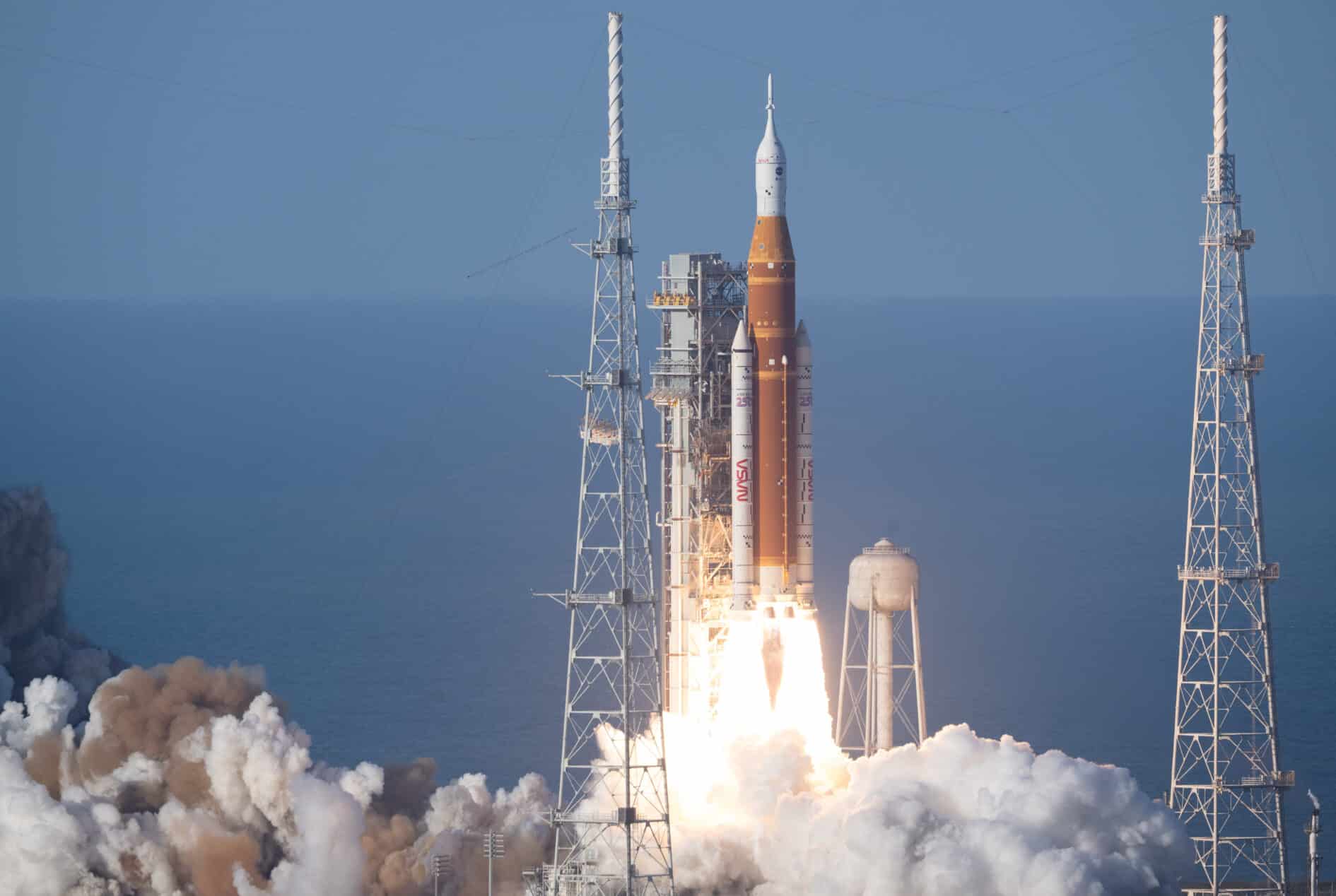
Modern lunar exploration efforts, such as the first crewed Artemis flight, Artemis II, are part of a strategy to prepare for deeper space missions.
NASA’s aim with Artemis is to send astronauts on challenging missions to explore more of the moon for technological advancement and scientific discoveries, and to learn how humans can live on another world, such as Mars, which is the most eye-catching and exciting aspect for many people.
Logistics and Mission Infrastructure
One of the less visible but equally critical aspects of preparing for Mars lies in logistics. Unlike missions to the International Space Station or even the Moon, a journey to Mars cannot rely on frequent resupply or rapid intervention from Earth. Every piece of equipment, every system and every contingency must be planned well in advance.
Lunar missions provide an opportunity to refine these logistical challenges in a real space environment. Coordinating launches, managing cargo delivery and maintaining equipment over time are all being tested on and around the Moon. These operations may seem routine, but they form the backbone of any sustainable mission beyond Earth.
For example, establishing reliable methods for transporting materials between orbit and the lunar surface helps engineers understand how similar systems might function on Mars. Managing spare parts, maintaining critical systems and planning for unexpected failures all become more complex as distance increases. The Moon allows mission planners to simulate these challenges without the extreme delays and constraints of Mars.
Another key factor is mission timing. Mars missions depend on specific launch windows that occur only every 26 months. Missing one can delay an entire mission by years. By contrast, lunar missions offer far more flexibility, allowing teams to practice scheduling, coordination and recovery strategies in a more forgiving environment.
These logistical lessons are essential, as a successful Mars mission will depend on the seamless coordination of countless moving parts, not a single breakthrough. The systems being tested through lunar exploration are helping to ensure that when the time comes, those parts will work together reliably.
From Practice to Progress
Nearly every breakthrough that occurs on the Moon carries implications for Mars. More efficient life support systems that extend mission durations, better habitat designs that improve crew safety, successful resource extraction methods that reduce dependence on Earth, and other advancements increase the feasibility of longer-term exploration.
It is easy to view lunar missions as a diversion to Mars. However, every advancement on the Moon builds confidence in taking on the grander goal of Mars, so every step is progress toward that goal.
The Path Forward
Mars remains among the most ambitious goals in human exploration, and many people want to see progress firsthand, which can lead to understandable impatience. The red planet demands systems that operate reliably and over long distances and in environments with little margin for error.
The Moon provides the opportunity to develop those systems step by step, so the journey to Mars runs as smoothly as possible. Testing technologies, refining operations and understanding the human impact of deep space missions means lunar exploration is laying the groundwork for what is to follow.
Every lunar breakthrough, even if it is not directly related to Mars, will add to the knowledge pool that will one day transform the Red Planet.
Author’s Personal Note: I’ve always considered myself someone who likes to look on the bright side of things, and that’s a big emphasis in this article. Shifting the focus of space efforts from the Red Planet to our own Moon presents a tempting offer to feel disheartened, but there is a lot of hope to be gleaned while remaining optimistic about the long-term benefits these decisions (and advancements) could yield to future Mars expeditions.
Images: Tahamie Farooqui on Unsplash; NASA/Joel Kowsky.