
The Mars Society is excited to announce that Brig. General (Ret.) Dr. S. Pete Worden will give an address about “Life in the Universe and Private Sector Space Science Initiatives” during the 27th Annual International Mars Society Convention, held in August at the University of Washington (Seattle). Dr. Worden currently serves as Chairman of the Breakthrough Prize Foundation and as Executive Director of the foundation’s “Breakthrough Initiatives,” a groundbreaking program launched in 2015 with the aim of searching for extraterrestrial… READ MORE >
News & Announcements
April 18th, 2024
Exploring the Red Frontier: Robotic Mining & Space Exploration with Dr. Kris Zacny
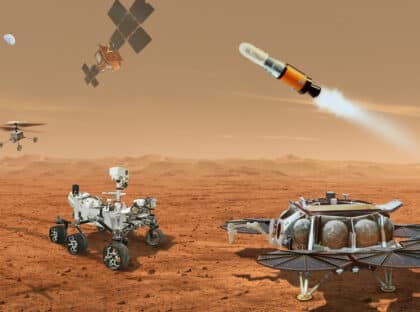
Dr. Kris Zacny, VP and Director of Exploration Technology at Honeybee Robotics, will be speaking at the 27th Annual International Mars Society Convention (Aug 8-11, 2024) at the University of Washington Seattle. He’ll share insights on robotic space exploration and mining. Honeybee Robotics is renowned for its innovative robotic systems, serving diverse industries such as spacecraft, defense, medical devices, and more. Dr. Zacny’s expertise spans space mining, In Situ Resource Utilization (ISRU), and planetary geotechnical engineering. With a Ph.D. in… READ MORE >
April 18th, 2024
Call for Abstracts (2024 Convention)
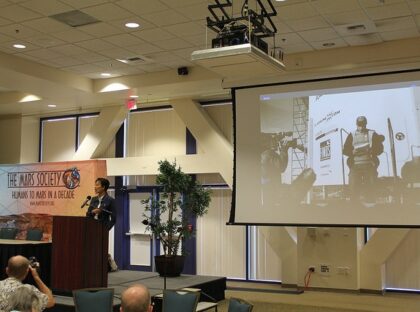
Presentations for the 27th Annual International Mars Society Convention are invited. This year’s four-day global forum (August 8-11, 2024 at the University of Washington in Seattle) will deal with all matters associated with the exploration and settlement of the Red Planet, including science, technology, engineering, spaceflight, artificial intelligence, politics, public policy & advocacy, STEM education, economics, etc. Abstracts between 150-300 words can be uploaded on to our Mars Society abstract page. Please note that the deadline for submitting abstracts for consideration is Friday,… READ MORE >

April 6th, 2024
Next RPL Guest Dr. Jan Špaček to Take Questions about the Search for Extant Life in the Solar System
In our upcoming April episode of 2024, Red Planet Live welcomes the respected astrobiologist, Dr. Jan Špaček. Hosted by the dynamic Ashton Zeth, this episode promises an engaging and insightful conversation about space. Dr. Jan Špaček, a prominent astrobiologist and senior research scientist at the Foundation for Applied Molecular Evolution, is set to join the Mars Society’s podcast, Red Planet Live, on Tuesday, April 16th (5:00 pm PT). Renowned for his expertise in molecular biology, analytical chemistry, and organic chemistry, Dr. Špaček’s… READ MORE >

March 17th, 2024
Mars Society Welcomes Nissan Advanced Technology Center Silicon Valley (NATC-SV) as 2024 URC Sponsor
The Mars Society is excited to welcome the Nissan Advanced Technology Center – Silicon Valley (NATC-SV) as a sponsor of the 2024 University Rover Challenge. Based in Santa Clara, Calif., NATC-SV is the center of global excellence for Artificial Intelligence and next-generation mobility solutions at Nissan Motor Co., Ltd. Researchers and scientists at the center study all areas of automotive research, from the use of AI for developing new battery materials to the design of new systems on a chip for the… READ MORE >
March 15th, 2024
Red Planet Creativity: Join Our 2024 Poster Contest!
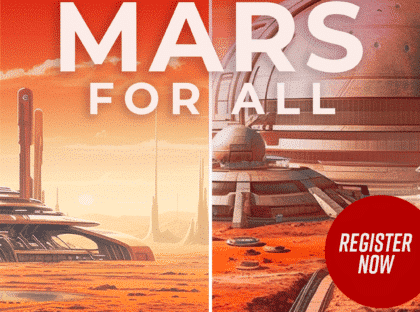
The Mars Society is hosting its annual poster design contest, and we want YOU to join in! If you’ve got a knack for creativity, graphic work, and love of Mars and space exploration, this is your chance to shine. The winning design will be used as the primary promotional graphic for our 27th Annual International Mars Society Convention (August 8-11, 2024) at the University of Washington (Seattle). This year’s convention theme, “The Road to Mars,” centers on the tangible progress… READ MORE >
March 12th, 2024
Register for the 2024 International Mars Society Convention!
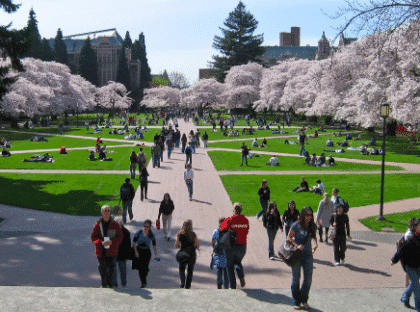
Calling all Mars and space advocates! Mark your calendars for the 2024 International Mars Society Convention, taking place Thursday, August 8th through Sunday, August 11th at the University of Washington campus (The HUB) in Seattle. This annual event, now in its 27th year, remains the premier global gathering focused on Mars exploration, human settlement planning, and cutting-edge space-related topics. The convention will bring together a diverse array of experts including scientists, engineers, aerospace executives, policymakers, journalists, and space enthusiasts to discuss humanity’s… READ MORE >

March 7th, 2024
Inspiring Women of Exploration: A Tribute on International Women’s Day
By Ashton Zeth, Guest Writer, Red Planet Bound, 03.08.24 International Women’s Day (IWD), celebrated annually on March 8th, is dedicated to honoring the achievements and contributions of women throughout history. Beyond celebrating the triumphs of women, IWD also focuses on raising awareness about ongoing struggles and campaigning for gender equality. According to the US Census Bureau, International Women’s Day dates back to March 8, 1857, in New York City, when “female textile workers marched in protest of unfair working conditions… READ MORE >